Select Language:
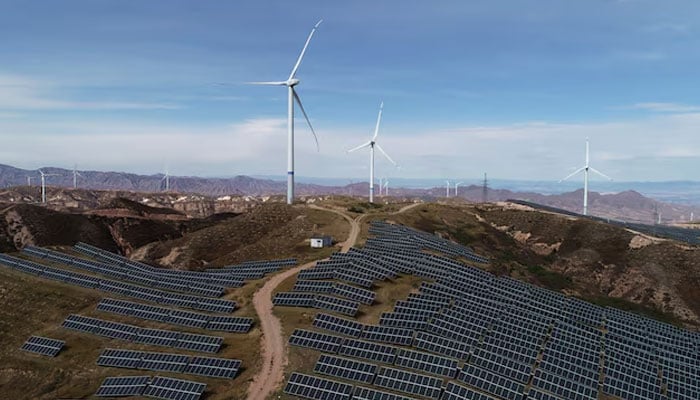
Last year, the progress of planned or ongoing solar and wind projects slowed, raising concerns about whether nations will reach their goal of tripling renewable energy capacity by the end of the decade.
In 2023, numerous countries committed to increasing their renewable energy capacity threefold by 2030 to combat global warming. However, the growth rate of new wind and solar projects fell to 11% in 2025, down from 22% in the previous year, mainly due to challenges faced by wind development initiatives, according to the Global Energy Monitor (GEM).
“Wind developers encountered political obstacles and a series of unsuccessful wind power auctions in affluent nations,” explained GEM researcher Diren Kocakusak. U.S. President Donald Trump opposed wind projects and openly disliked renewable energy, but Kocakusak noted that the global slowdown wasn’t linked to any single country.
GEM’s analysis also revealed that only a small portion of the growth in wind and solar capacity comes from wealthy G7 nations. The focus is shifting convincingly toward emerging and developing economies. China continues to lead the expansion of renewables, contributing approximately a third of worldwide capacity growth in 2025—around 1.5 terawatts—more than the combined increase of the next six countries.
Despite this impressive growth, it remains insufficient to keep the world on track for the 2030 targets. Even if all announced and planned projects move forward, the world would still fall short. Nearly 40% of these projects experience delays, are put on hold, or canceled altogether, according to GEM.
Kocakusak emphasized that the goal isn’t impossible to achieve yet. While momentum may be slowing, it’s not due to a lack of potential. There is still enough time for nations to boost capacity, and many unannounced solar projects could be completed before 2030. Wind projects often take longer to develop, but over 3.5 terawatts of wind and solar capacity have been announced without a confirmed start date, which could still help meet the 2030 objective if they are brought online quickly.
Some developed countries are actively supporting renewable growth. Japan is considering changes to wind auction procedures, and the UK is increasing investments. However, setbacks like reports suggesting Germany might restrict grid access for renewables highlight ongoing challenges.
Ultimately, whether the 2030 tripling target is met depends on the commitment and effective implementation by governments and developers worldwide.
 ChatGPT
 Perplexity
 Gemini AI
 Grok AI