
Select Language:
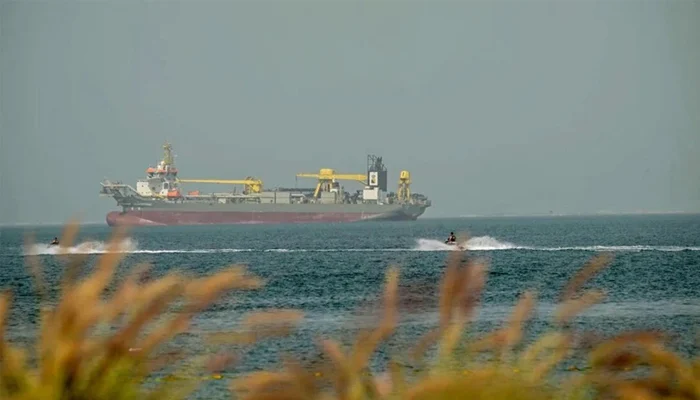
Ships laden with cargo, oil, and other materials caught in the Middle East are experiencing GPS issues that are worse than what your smartphone encounters. Experts indicate that the disruption in satellite navigation signals since US-Israeli strikes has prevented around 1,000 ships in the Gulf and Gulf of Oman from accurately pinpointing their locations—either temporarily or continuously. According to Dimitris Ampatzidis, a senior analyst at energy market intelligence firm Kpler, this figure accounts for nearly half of the vessels in that region, most of which are situated off the coasts of the United Arab Emirates and Oman.
Satellite navigation relies on a network of satellites transmitting timing signals that allow devices to calculate precise locations. While smartphones now receive signals from four different global navigation satellite systems—American, European (Galileo), Russian (GLONASS), and Chinese (BeiDou)—most ships still primarily listen to the original civilian GPS L1 C/A signal that has been in use since the early 1990s. This makes them vulnerable because they don’t tap into newer, more robust GNSS signals like BeiDou or Galileo, leaving them at risk if GPS signals are jammed.
The situation is even more severe for aircraft, as aviation regulations typically restrict built-in GPS receivers to only the L1 C/A signal, which is outdated by about 15 years. Jamming this signal is relatively simple; it involves broadcasting a stronger radio signal on the same frequency, creating a “wall of mush” that disrupts navigation. Spoofing, a more advanced threat, manipulates the ship’s Automatic Identification System (AIS). This system transmits a ship’s identity, destination, and position once every second. Spoofing this data can cause ships to appear on land in Iran or the UAE, creating dangerous navigational errors.
GPS signals serve multiple purposes beyond determining location—they also synchronize onboard clocks and power radar systems, speed logs, and other critical instruments. Even if the vessels are protected from drone attacks and escorted through critical areas like the Strait of Hormuz, operating without GPS is highly risky. Due to the large size of cargo ships, electronic navigation aids have become essential. When GPS is unavailable, crews are forced to revert to outdated tools such as radar and visual landmarks.
Both offensive and defensive jamming methods are being used in the Gulf region. Countries are intentionally targeting their own coastal areas to defend against Iranian satellite-guided drones, even if it hampers their own operations. Similar tactics were employed by Israel in 2024 and by Iran during its recent conflict with Israel last year. Even if this causes disruptions to air traffic, shipping, or everyday mobile services, nations deem it an acceptable trade-off to maintain security.
To address these vulnerabilities, startups are developing alternative navigation technologies that leverage Earth’s magnetic field or inertial systems. However, widespread adoption for maritime navigation that bypasses satellite GPS is still in the future. For now, ships continue to rely heavily on GPS, making the disruption a serious concern for global trade and regional security.
 ChatGPT
 Perplexity
 Gemini AI
 Grok AI