Select Language:
Mojtaba Khamenei, son of Iran’s former supreme leader Ayatollah Ali Khamenei, has been appointed as his successor. The top clerical body, the Assembly of Experts, announced the decision shortly after midnight on Monday in Iran. At 56 years old, Mojtaba is a mid-ranked cleric who has survived conflicts like the US-Israel airstrikes targeting Iran. His father, Ayatollah Ali Khamenei, was killed in an airstrike last week at 86 years old.
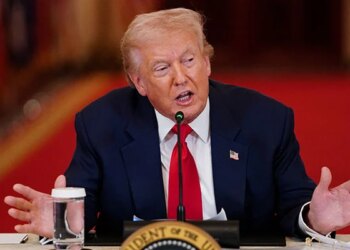
A member of the council, Ayatollah Mohsen Heidari Alekasir, stated on a video that the chosen candidate was selected based on Khamenei’s guidance, emphasizing that Iran’s leader should be “hated by the enemy.” He also mentioned that even the US (referred to as the “Great Satan”) has acknowledged Mojtaba’s name, which comes days after then-President Donald Trump labeled him as an “unacceptable” choice.
Among those who were considered for the position were Alireza Arafi, a member of the interim council; Mohsen Araki; and Hassan Khomeini, the grandson of Iran’s founder, Ruhollah Khomeini.
Mojtaba has accumulated influence as a close confidant of his father, especially within Iran’s security forces and large business conglomerates under their control. He opposes reformers seeking better engagement with Western countries and maintains strong ties with Iran’s elite Revolutionary Guard Corps (IRGC), giving him significant leverage across Iran’s political and security sectors. Sources suggest he has built key behind-the-scenes influence as his father’s “gatekeeper.”
He enjoys strong support among the IRGC’s younger generations. The Iranian supreme leader ultimately holds authority over national policy, including foreign affairs and nuclear development. While Western nations aim to prevent Iran from developing nuclear weapons, Iran insists its nuclear work is purely for civilian purposes.
Despite his rising influence, Mojtaba might face opposition from Iranians eager for larger freedoms, as protests and calls for reform have persisted despite government crackdowns.
Born in 1969 in Mashhad, Mojtaba grew up during his father’s opposition against the Shah and served in the Iran-Iraq war as a young man. He received religious education in Qom, Iran’s theological hub, and holds the clerical rank of Hojjatoleslam.
He has not held any official government role but has appeared at loyalty rallies and is seen as close to conservative factions, especially given his connections with the IRGC and his service in a combat unit at the end of the Iran-Iraq war (1980-1988). The US Treasury Department sanctioned him in 2019, citing his role as a de facto representative of Khamenei — working in his father’s office, coordinating with IRGC commanders, and supporting Iran’s regional ambitions and domestic policies.
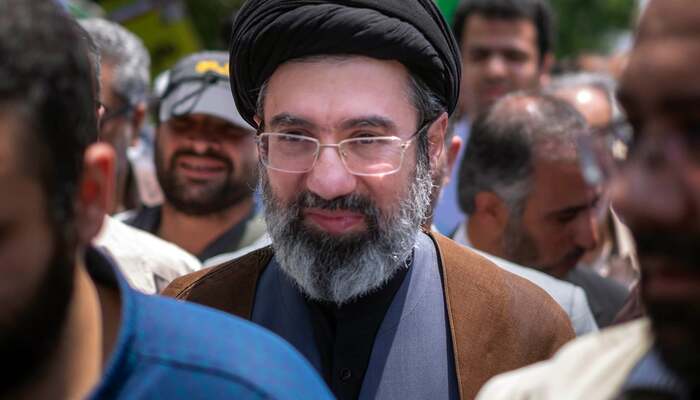
Mojtaba resembles his father physically and wears the traditional black turban of a Sayyed. His wife, Zahra Haddad-Adel, daughter of a former parliamentary speaker, was also killed in the recent US-Israel strikes that targeted the Iranian leadership.
Israel has issued a stern warning to Mojtaba and those involved in his appointment, warning that “the hand of the State of Israel will continue to pursue any successor and anyone who seeks to appoint one.” The Assembly of Experts, which has 88 members elected every eight years, previously oversaw Iran’s leadership transition in 1989 after Khomeini’s death.
 ChatGPT
 Perplexity
 Gemini AI
 Grok AI