Select Language:
The White House emphasizes the ongoing conflict with Iran as its top priority for the President. Meanwhile, discussions between Beijing and Washington continue ahead of President Trump’s upcoming visit. Over in Paris, U.S. and Chinese officials participated in productive trade negotiations.
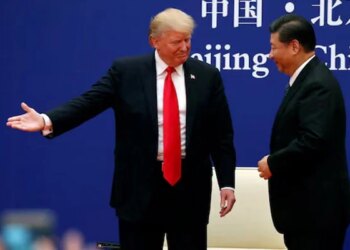
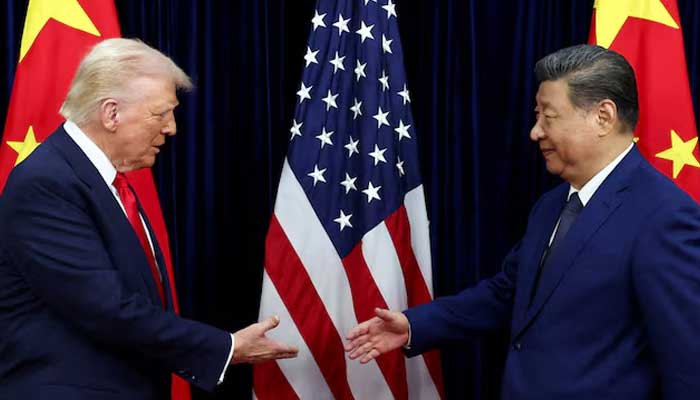
President Trump’s planned meeting with Chinese President Xi Jinping remains on schedule but could be postponed due to focus on Iran, according to White House spokesperson Karoline Leavitt. Trump is expected to visit China from March 31 to April 2 for a highly anticipated summit between the world’s largest economies.
Leavitt mentioned, “I don’t believe the meeting is at risk, but it’s possible it might be delayed,” during an interview on Fox News’ “Fox & Friends.” Trump told the Financial Times on Sunday that he might postpone the meeting if China doesn’t assist in reopening the Strait of Hormuz. The Chinese foreign ministry has yet to respond to a Reuters request for comment.
Should the trip be postponed, the White House will announce new dates soon, Leavitt assured. “The President’s primary responsibility right now as commander-in-chief is to ensure the success of Operation Epic Fury, which is ongoing 24/7 here at home and at the White House. We’ll share new dates shortly,” she added.
Meanwhile, China confirmed it is engaged in talks with the U.S. regarding the President’s forecasted visit, amid tensions over the Strait of Hormuz, a critical route for oil transportation that Iran has closed in retaliation against US and Israeli actions against Tehran. Trade discussions are expected to be a key part of the upcoming talks between President Xi Jinping and Trump, reported AFP.
Beijing’s Foreign Ministry stated today that China and the U.S. continue communication concerning Trump’s visit, with Foreign Ministry spokesperson Lin Jian emphasizing that “head-of-state diplomacy plays an essential strategic role in U.S.-China relations.” Lin did not comment on Trump’s recent pressures on NATO allies and China. He noted that the “tense situation” in the Strait has disrupted international trade routes for goods and energy.
Over the weekend, top U.S. and Chinese economic officials concluded trade talks in Paris, laying the groundwork for Trump’s visit. U.S. Treasury Secretary Scott Bessent and Chinese Vice Premier He Lifeng, along with U.S. Trade Representative Jamie Greer, participated. Both sides described the meetings as “constructive,” with Beijing’s chief trade negotiator Li Chenggang calling them “deep and candid.” Li highlighted that both nations agree that stable economic and trade relations benefit both countries and the global economy. They also discussed establishing a bilateral working mechanism aimed at fostering cooperation in trade and investment.
This year follows a turbulent period in U.S.-China economic relations since Trump’s return to office.
 ChatGPT
 Perplexity
 Gemini AI
 Grok AI