Select Language:
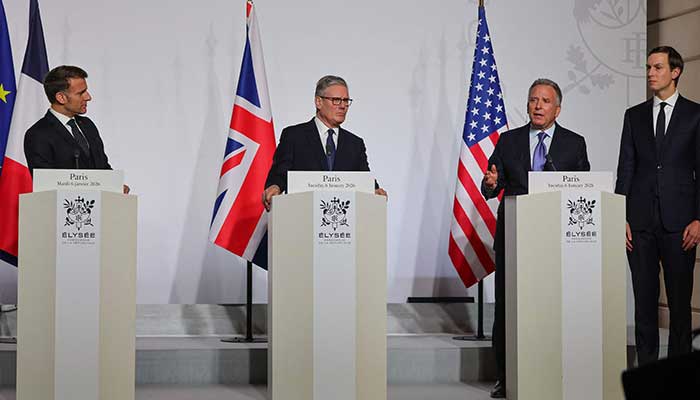
During a summit in Paris, leaders from a coalition of Ukraine’s allies announced their commitment to security assurances, including binding support if Russia resumes hostilities. The United States officially endorsed this broader coalition for the first time, emphasizing support for guarantees that would become effective following a ceasefire. Unlike previous gatherings, this summit was attended by U.S. representatives Steve Witkoff and Jared Kushner, along with Europe’s top military commander, Alexus Grynkewich, who recently discussed security specifics with European armed forces. Witkoff emphasized that the security measures are intended to prevent future attacks and provide strong defense if aggression occurs, claiming they are the most robust ever implemented. Kushner added that Ukraine must be assured of security and clear deterrence capabilities before finalizing a peace deal.
The coalition also proposed a U.S.-led mechanism for ceasefire monitoring and verification, likely utilizing drones, sensors, and satellites instead of U.S. troops. Although the official statement suggested U.S. involvement, it omitted specific language about deploying American capabilities to support a multinational force in Ukraine, indicating some dilution from earlier drafts. European officials viewed the presence and strong remarks of U.S. envoys as evidence of Washington’s backing for this security architecture.
Since November, diplomatic efforts to end nearly four years of conflict have sped up. However, Moscow has yet to show willingness to compromise, especially after Ukraine’s proposals challenged Russia’s main demands. Russia remains publicly unreceptive to accepting peace agreements that include NATO troops in Ukraine, maintaining its opposition.
The focus has shifted from promising military aid and potential contributions to reassurance forces to securing legally binding guarantees for Ukraine’s defense. Leaders now aim to finalize commitments that might encompass military support, intelligence sharing, sanctions, and diplomatic efforts, to ensure Ukraine’s safety in the face of renewed aggression.
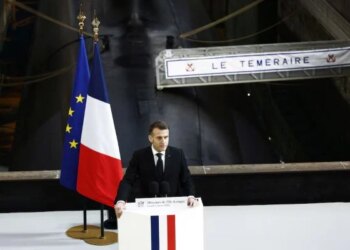
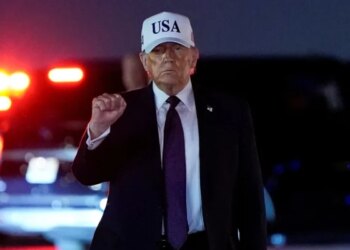
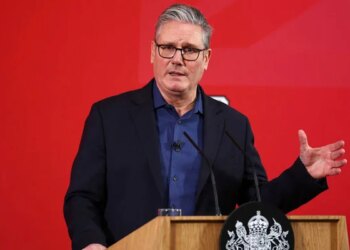
Following the signing of the declaration on deploying a post-ceasefire force, Ukrainian President Volodymyr Zelenskiy noted that discussions with the U.S. delegation were meaningful but acknowledged more progress was necessary. European heads of state such as French President Emmanuel Macron, British Prime Minister Keir Starmer, Polish Prime Minister Donald Tusk, and Italian Prime Minister Giorgia Meloni underscored that the agreement demonstrated a renewed sense of unity between Europe and the U.S. in supporting Ukraine. Leaders explicitly dismissed concerns about relying on commitments from Donald Trump, especially after his recent comments suggesting the U.S. should take control of Greenland, an autonomous region of NATO ally Denmark.
The leaders also committed to establishing a European-led multinational “Force for Ukraine” to aid in rebuilding the country’s military and bolster deterrence, with the potential involvement of U.S. support. France and Britain signed a declaration of intent to deploy multinational forces once a ceasefire is in place, with Macron indicating that thousands of French troops could be mobilized. Starmer highlighted that this framework creates the legal basis for British, French, and partner forces to operate within Ukraine, securing air and sea regions and strengthening Ukrainian military capabilities for the future.
 ChatGPT
 Perplexity
 Gemini AI
 Grok AI