Select Language:
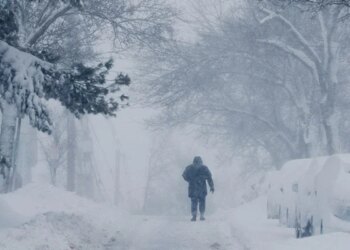
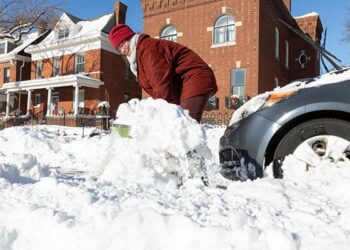
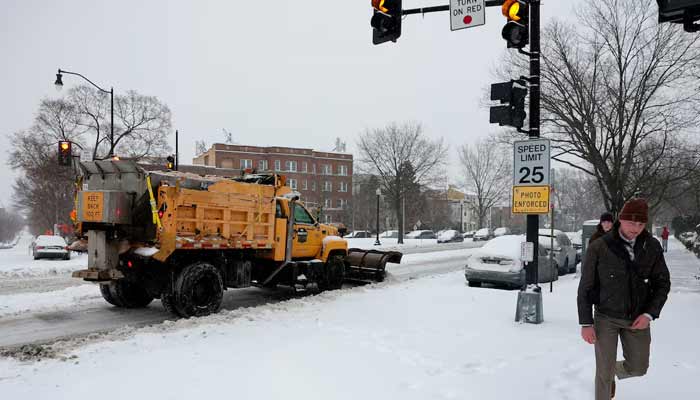
Heavy snowfall, sleet, freezing rain, and dangerously low temperatures are anticipated across the U.S. this Sunday. At least 12 states have received federal emergency declarations in response. Power outages are affecting states including Mississippi, Louisiana, Texas, among others, with over 850,000 customers still without electricity as of Sunday morning. The outages are most severe in Tennessee, with nearly 300,000 affected, along with more than 100,000 each in Mississippi, Texas, and Louisiana. Other impacted states include Kentucky, Georgia, Virginia, and Alabama.
Flight cancellations have surpassed 10,200 nationwide for Sunday, following more than 4,000 cancellations on Saturday. Washington, D.C.’s Ronald Reagan National Airport canceled all of its flights for the day. Airlines like Delta announced plans to operate on reduced schedules depending on weather conditions, especially in cold-weather hubs where de-icing and baggage operations are being supported by relocating staff.
The National Weather Service forecasts heavy snowfall from the Ohio Valley up through New England, with New England potentially receiving up to 18 inches. The southeastern U.S. and parts of the Mid-Atlantic are expected to get rain and freezing rain. The storm is also bringing intense cold and wind chills from the southern plains to the Northeast, creating prolonged hazardous travel and infrastructure challenges.
President Donald Trump designated emergency status for several states, including South Carolina, Virginia, Tennessee, Georgia, North Carolina, Maryland, Arkansas, Kentucky, Louisiana, Mississippi, Indiana, and West Virginia, calling the storm “historic.” Seventeen states and the District of Columbia have declared weather emergencies, according to the Department of Homeland Security. DHS Secretary Kristi Noem warned residents to prepare by stocking up on fuel and food, emphasizing the severity of the cold.
Energy officials issued emergency orders to stabilize the power grid. The Electric Reliability Council of Texas has been authorized to deploy backup generation to prevent blackouts at critical facilities, including data centers. Similarly, PJM Interconnection in the Mid-Atlantic has been allowed to run certain resources beyond normal limits due to the storm. Electric grid operators across the country are taking precautions against rotating outages.
Virginia-based Dominion Energy highlighted that if the forecasted ice conditions materialize, this winter event could rank among the largest impacting their operations. These measures underscore the widespread effort to manage the storm’s impact and ensure public safety.
 ChatGPT
 Perplexity
 Gemini AI
 Grok AI