Select Language:
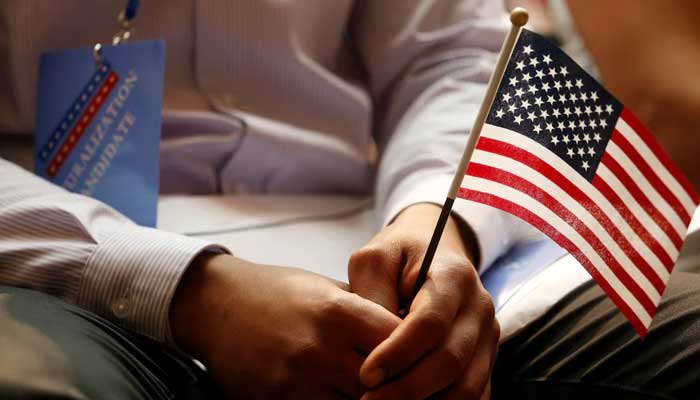
The Trump administration has announced a pause on all immigration applications, including green cards and U.S. citizenship processes, for immigrants coming from 19 non-European countries. This move was justified by concerns over national security and public safety. The pause affects individuals from the 19 nations already included in a partial travel ban established in June, which imposed additional restrictions on immigration—an important part of President Donald Trump’s political agenda.
Countries such as Afghanistan and Somalia are among those impacted. The new policy, outlined in a formal memorandum, references last week’s attack on U.S. National Guard members in Washington, where an Afghan suspect was arrested. The incident resulted in one Guard member’s death and another’s critical injury.
Recently, Trump has intensified rhetoric against Somalis, labeling them as “garbage” and expressing a desire to exclude them from the country. Since re-taking office in January, Trump has aggressively ramped up immigration enforcement efforts, deploying federal agents to major cities and turning away asylum seekers at the U.S.-Mexico border.
While his administration has frequently promoted deportation campaigns, its focus on reforming legal immigration has been relatively subdued until now. The new restrictions signal a shift, emphasizing national security concerns and tying recent violence to alleged threats from immigrants, while also shifting blame towards the Biden administration’s policies.
The list of countries targeted in the latest memorandum includes Afghanistan, Burma, Chad, the Republic of the Congo, Equatorial Guinea, Eritrea, Haiti, Iran, Libya, Somalia, Sudan, and Yemen. These nations experienced the strictest immigration restrictions in June, including a complete suspension of entries with a few exceptions.
Additional countries on the list—such as Burundi, Cuba, Laos, Sierra Leone, Togo, Turkmenistan, and Venezuela—faced partial restrictions previously. The new policy halts pending applications and requires all immigrants from these countries to undergo a rigorous re-review process, which may include interviews or re-interviews to assess potential security risks.
The memorandum also cites several recent crimes allegedly linked to immigrants, including the attack on the National Guard. Representatives from the American Immigration Lawyers Association have reported cancellations of naturalization ceremonies, interviews, and status adjustments for individuals from countries on the travel ban list.
 ChatGPT
 Perplexity
 Gemini AI
 Grok AI