Select Language:
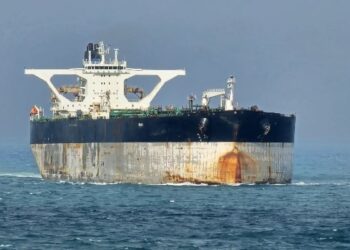
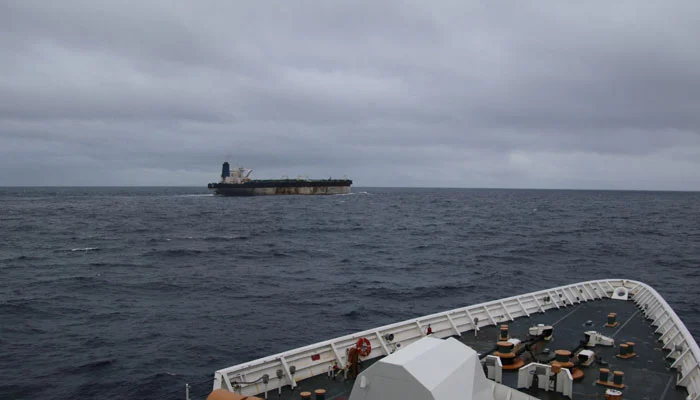
The U.S. has foiled an attempt to seize a Russian-flagged oil tanker in the North Atlantic, pursuing it from off the coast of Venezuela. The operation, which drew official rebuke from Moscow, involved seizing the vessel despite it being escorted by the Russian Navy.
This ship, previously registered as Bella-1, had recently changed its name to Marinera and adopted Russian registration, with its crew reportedly painting a Russian flag on the hull. It was en route to Venezuela when it managed to evade a U.S. blockade, despite being under U.S. sanctions since 2024 due to alleged links with Iran and Hezbollah.
The vessel’s seizure was based on a warrant issued by a U.S. federal court. Following the action, U.S. European Command announced the operation on social media, emphasizing that the U.S. maintains control over Venezuelan oil “indefinitely.”
Russia’s Transport Ministry condemned the seizure, asserting that navigation rights on the high seas must be respected and no nation has the authority to forcefully interfere with vessels registered under other countries’ jurisdictions.
In addition, U.S. authorities also seized another sanctioned tanker in the Caribbean Sea. Homeland Security Secretary Kristi Noem posted that both ships had last docked or were headed to Venezuela, sharing footage of U.S. forces rappelling from helicopters onto an unidentified vessel and moving toward its bridge with weapons at the ready.
Since last weekend, when U.S. special forces took Venezuelan President Nicolás Maduro and his wife to New York to face drug charges, U.S. officials have indicated plans to control Venezuela’s oil exports. President Donald Trump stated the U.S. would oversee Venezuela’s oil industry, with an expected shipment of 30-50 million barrels of sanctioned Venezuelan crude to U.S. ports—potentially generating over $2 billion—under American control.
U.S. Energy Secretary Chris Wright confirmed that Washington will manage Venezuelan oil sales “indefinitely.” It remains unclear whether interim President Delcy Rodriguez, Maduro’s close confidante, has agreed to this arrangement or what legal basis it might have. Rodriguez has expressed willingness to cooperate with the U.S., despite concerns over possible broader efforts to change the Venezuelan regime.
 ChatGPT
 Perplexity
 Gemini AI
 Grok AI