Select Language:
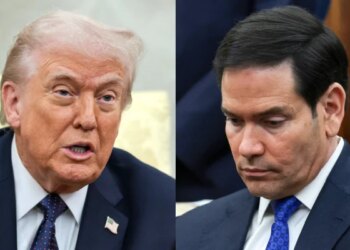
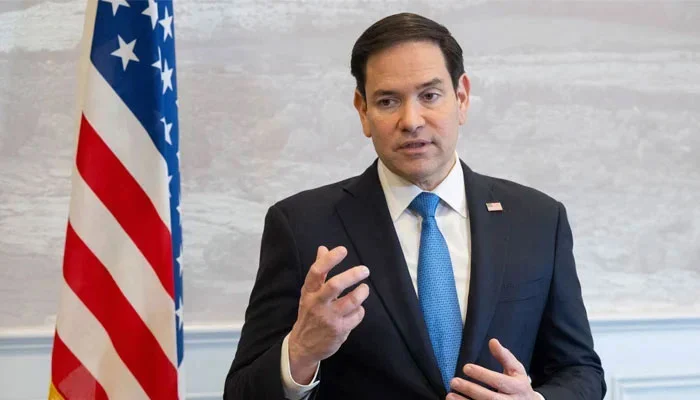
A day before the Washington–Tehran nuclear talks in Geneva, U.S. Secretary of State Marco Rubio stated that reaching an agreement with Iran would be challenging. Rubio made these comments during his visit to Budapest on Monday. He expressed optimism about the diplomatic possibilities but emphasized caution, saying, “There’s an opportunity to negotiate an agreement that addresses our concerns; we’re open to it. But I don’t want to overpromise.”
Rubio pointed out, “It’s going to be tough. It’s been extremely difficult for anyone to make real deals with Iran because they’re making theological, not geopolitical, decisions.” Meanwhile, Iran’s foreign minister met with the head of the International Atomic Energy Agency (IAEA) in Geneva.
The diplomatic tension intensifies as Iran has kicked off a military exercise in the Strait of Hormuz, a critical waterway vital for international shipping and oil exports from Gulf countries. This comes amid renewed negotiations earlier this month aimed at resolving their dispute over Iran’s nuclear program, which Western nations and Israel suspect is a pathway to nuclear weapons—an assertion Iran denies.
The scope of negotiations has expanded to include Iran’s missile stockpiles, with the U.S. seeking to address non-nuclear issues as well. Iran, however, insists it will only consider discussions on limiting its nuclear activities in exchange for sanctions relief and refuses to accept a complete halt to uranium enrichment, stating that missile capabilities are off-limits.
Iran’s Foreign Minister Abbas Araqchi expressed the country’s aim for a “fair and equitable deal,” adding, “What’s not up for discussion is submission to threats.” Iran has repeatedly threatened to close the Strait of Hormuz to retaliate against attacks, which would severely impact global oil supplies and cause crude prices to soar.
Iranian Revolutionary Guards conducted a strategic drill called “Smart Control of the Strait of Hormuz” to test naval readiness for defending the waterway. On the same day, Iran’s civil defense held a chemical defense drill in the Pars Special Economic Energy Zone, enhancing preparedness for potential chemical incidents in Iran’s energy hub.
Deputy Foreign Minister Majid Takht-Ravanchi indicated Iran might be willing to compromise on its nuclear program in exchange for sanctions relief, urging the U.S. to demonstrate its willingness to negotiate. Prior to Israeli and U.S. strikes on Iran’s nuclear sites in June, negotiations had stalled over Washington’s demand that Iran cease uranium enrichment—viewed by the U.S. as a step toward nuclear weapon development—an Iran has consistently denied.
Iran maintains its nuclear program is for peaceful purposes and is working to build trust by demonstrating that its enrichment activities are solely for civilian use. During his Geneva visit, Araqchi also discussed cooperation with the IAEA and Iran’s technical stance on negotiations with the U.S.
The IAEA has been urging Iran for months to clarify the fate of its 440 kg of highly enriched uranium after Israeli-U.S. strikes and to resume inspections in key sites like Natanz, Fordow, and Isfahan, bombed last June. Israeli Prime Minister Benjamin Netanyahu recently emphasized that any U.S. deal should include dismantling Iran’s nuclear infrastructure, not just halting enrichment.
Amid these tensions, Iran has been conducting military drills and asserting its readiness to defend key waterways, while diplomatic efforts continue amid mutual distrust and strategic posturing.
 ChatGPT
 Perplexity
 Gemini AI
 Grok AI