Select Language:
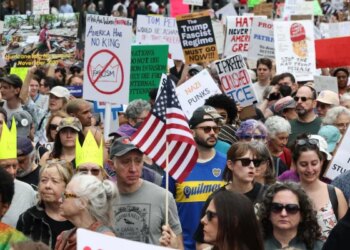
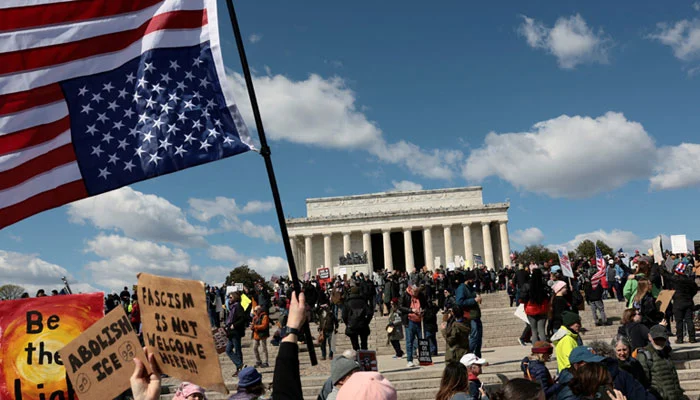
Protests against President Donald Trump erupted nationwide, with demonstrations happening across all 50 states and extending into other countries. Over 3,200 rallies are scheduled, including smaller communities and even remote Alaskan towns like Kotzebue. Organizers anticipate a record turnout, surpassing the millions who participated in previous protests on Trump’s birthday last June and in October, which drew an estimated seven million participants.
The protests originated as a display of defiance in 2025 but have since evolved into a broad movement called “No Kings,” representing widespread opposition to Trump’s policies. The current anger is fueled by his handling of the Iran conflict, perceptions of authoritarian tendencies, and various domestic issues including climate change denial and efforts to weaken diversity programs. Critics condemn his use of executive power, the Justice Department’s actions against opponents, and his hawkish military stance despite campaigning as a peacemaker.
Major cities like New York, Atlanta, and Detroit saw thousands gather, with some carrying signs like “We Are Losing Our Democracy.” In West Bloomfield, Michigan, protesters braved freezing temperatures. Prominent figures such as Bruce Springsteen plan to perform in Minneapolis, where he recently composed a protest song inspired by the deaths of two Americans at the hands of federal agents during immigration protests.
The movement’s momentum is driven partly by President Trump’s declining approval ratings, now below 40%, and the upcoming midterm elections, where control of Congress may shift away from his party. Notably, two-thirds of those planning to protest on Saturday reside outside big cities, reflecting widespread discontent.
The protests are also international, with gatherings in European capitals like Amsterdam, Madrid, and Rome. The movement continues to grow, illustrating a deep-seated disagreement with the current administration’s approach and vision for the country.
 ChatGPT
 Perplexity
 Gemini AI
 Grok AI