Select Language:
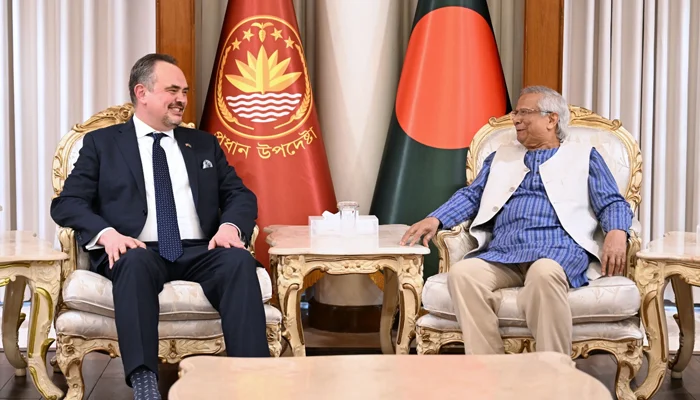
The United States is growing increasingly concerned about China’s expanding influence in South Asia. To address this, Washington plans to provide Bangladesh’s upcoming government with U.S. and allied defense systems as alternatives to Chinese technology, according to the U.S. ambassador in Dhaka, Brent T. Christensen, speaking to Reuters.
Bangladesh is heading into a general election on Thursday, following a popular uprising led by Generation Z that ousted Prime Minister Sheikh Hasina—an ally of India—in August 2024. Since then, Hasina has sought refuge in New Delhi, paving the way for China to strengthen its foothold in Bangladesh as India’s influence diminishes.
Recently, China signed a defense pact with Bangladesh to establish a drone manufacturing plant near the Indian border, causing concern among foreign diplomats.
“The U.S. is focused on the increasing Chinese influence in South Asia and is dedicated to working closely with the Bangladeshi government to highlight the risks associated with certain Chinese engagements,” Christensen stated.
He indicated that the U.S. offers various options to help Bangladesh enhance its military capabilities, including systems from the U.S. and allied countries, providing alternatives to Chinese military hardware, though he didn’t go into specifics.
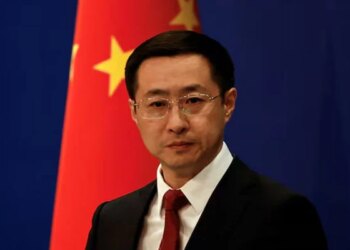
China’s foreign ministry defended its relationship with Bangladesh, describing it as a comprehensive strategic partnership that benefits both nations across political, economic, and security sectors. They added that their cooperation is friendly and mutually beneficial, without aiming at any third country or tolerating interference.
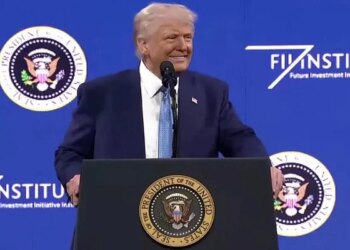
Christensen also emphasized that the Trump administration hopes for a strong relationship between Bangladesh and India to ensure regional stability. Since Hasina’s departure, relations between Delhi and Dhaka have soured, affecting visa services and cricket exchanges.
On the economic front, Christensen noted that many U.S. companies are interested in investing in Bangladesh but are waiting for the new government to demonstrate that the country is open for business. He emphasized that commercial diplomacy is a top priority and that the U.S. looks forward to building on the progress made with Bangladesh’s interim government, especially in strengthening trade, economic, and security ties.
Chevron, the energy giant, has operated in Bangladesh for decades, but most other U.S. companies face challenges such as high taxes and difficulties in profit repatriation. The ambassador assured that the U.S. would work with whichever government the Bangladeshi people elect.
Elections are expected to feature two main coalitions: one led by the Bangladesh Nationalist Party (BNP) and the other by Jamaat-e-Islami, with polling suggesting the BNP has an edge.
Regarding the approximately 1.2 million Rohingya refugees in Bangladesh, Christensen reaffirmed that the U.S. remains the largest contributor to humanitarian efforts. He highlighted a recent $2 billion global funding agreement with the United Nations aimed at improving aid effectiveness in Bangladesh and called on other international donors to increase their support. He underscored that the U.S. cannot shoulder the entire burden alone, especially as the UN agency has struggled to secure sufficient funds, resulting in cutbacks and school closures for Rohingya children.
 ChatGPT
 Perplexity
 Gemini AI
 Grok AI