Select Language:
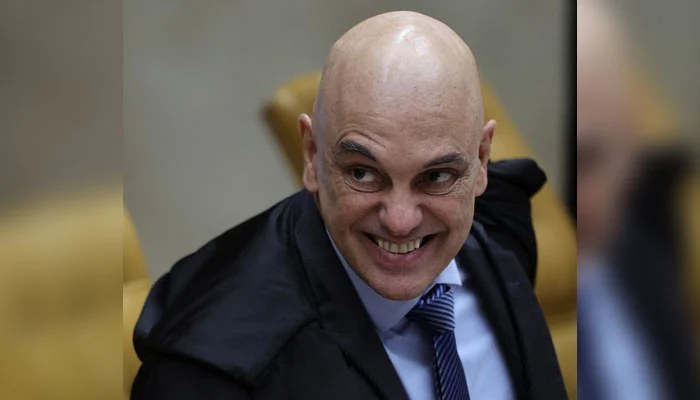
Brazil’s Supreme Court Judge Alexandre de Moraes observes as Indigenous people participate in a session where justices discuss the so-called “Marco Temporal” (Temporal Milestone) legal doctrine at the Supreme Court in Brasília on December 10, 2025. — Reuters
WASHINGTON/BRASILIA: The U.S. government has lifted sanctions against a Brazilian Supreme Court Justice who was previously targeted for overseeing a criminal case involving an ally of former President Donald Trump, according to the Treasury Department on Friday.
This swift reversal, less than five months after the initial sanctions and amid a process of reducing hefty tariffs on Brazilian exports, exemplifies the warming relationship between Trump and Brazil’s President Luiz Inácio Lula da Silva, shifting away from earlier staunch support for Trump’s right-wing predecessor.
In July, the U.S. imposed sanctions on Justice Alexandre de Moraes under the Global Magnitsky Act, criticizing him for presiding over the trial that led to the conviction and imprisonment of ex-President Jair Bolsonaro for attempting a coup following his defeat in the 2022 election.
Trump labeled that trial a “witch hunt,” and the Trump administration accused Moraes of manipulating courts, authorizing unwarranted pre-trial detentions, and curbing free speech.
On Friday, the Treasury also lifted sanctions against Moraes’ wife, Viviane Barci, along with those on the Lex Institute, a financial organization managed by Barci and other family members. The sanctions had contributed to diplomatic tensions earlier this year, especially when Trump imposed substantial tariffs on various Brazilian goods, some of which he started to remove last month.
Lula welcomed the development, stating that he had advocated for the sanctions to be lifted during a call with Trump last week.
“In my conversation with Trump last week, he asked, ‘Is this good for you?’ I responded that it’s good for Brazil and for Brazilian democracy,” Lula said during an event in São Paulo.
At the same event, Moraes described the Treasury’s decision as a “triple win” for Brazil’s democracy, justice system, and sovereignty.
“I cannot thank President Lula enough for his efforts on my behalf and for my wife’s,” Moraes added.
Last week, Trump and Lula discussed sanctions during what the U.S. President described as a “great” phone call, signaling the start of a “newly formed partnership” after months of tension.
A source within Brazil’s presidency, speaking anonymously to Reuters, clarified that Brazil made no concessions in exchange for the lifting of sanctions.
“There was no quid pro quo,” the source confirmed.
Support by Washington for legislation to shorten sentences
Recent days saw Brazilian lawmakers approve a bill significantly reducing sentences for Bolsonaro and others convicted of anti-democratic actions following the 2022 elections.
The Trump administration expressed support for the legislation, which now awaits Senate approval and likely faces opposition from Lula and the Supreme Court.
“The United States views the passage of this important amnesty bill by Brazil’s lower house as a positive step indicating improvements in the rule of law,” a senior U.S. official said on Friday, adding that continued sanctions on Moraes are misaligned with U.S. foreign policy interests.
Flavio Bolsonaro, Bolsonaro’s eldest son who announced a presidential bid last week with his father’s endorsement, welcomed the U.S. move as a “big gesture” aimed at the Brazilian right. He indicated that the Senate should pass the bill, which could halt his father’s imprisonment.
“We’ll vote on the amnesty bill next week in the Senate, and if it passes, I’m confident that the U.S. will fully lift tariffs on Brazilian exports,” Flavio wrote on X, referencing existing tariffs.
U.S. Deputy Secretary of State Christopher Landau supported the legislation’s passage, calling it a “positive first step” toward addressing judicial overreach.
Supporters of sanctions relief, notably Eduardo Bolsonaro, brother of Flavio and younger son of Bolsonaro, voiced regret over the U.S. decision to remove sanctions, citing political divisions within Brazil.
“The lack of internal unity and insufficient domestic support for initiatives abroad have contributed to the worsening of the current situation,” Eduardo stated.
 ChatGPT
 Perplexity
 Gemini AI
 Grok AI