Select Language:
U.S. veto power limits accountability at the UN Security Council. The U.S. justifies its actions under UN Charter Article 51, citing the right to self-defense. However, legal analysts argue that the U.S. operation breached international law.
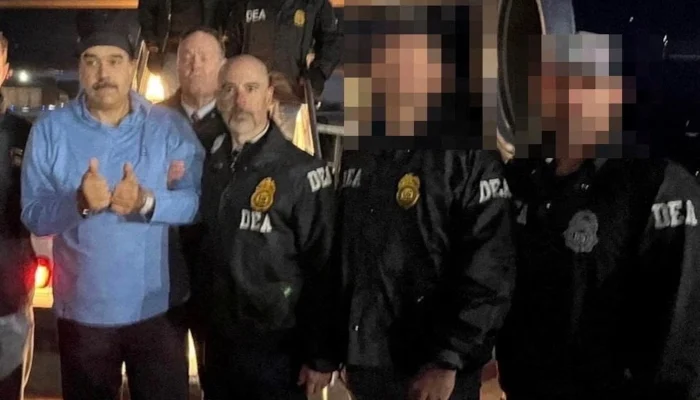
The UN Security Council, composed of 15 members, is set to review the legality of the recent U.S. operation that resulted in the detention of Venezuelan President Nicolas Maduro in New York, where he awaits a court hearing on drug charges. The raid on Saturday disrupted power in parts of Caracas and targeted military sites, with reports of casualties from Venezuelan authorities.
While Russia, China, and Venezuela’s other allies accuse the U.S. of violating international law, most U.S. allies—many of whom oppose Maduro—have been cautious in voicing explicit concerns about the military intervention. Richard Gowan, an expert at the International Crisis Group, suggests that European nations will likely hesitate or hedge their statements within the Security Council.
UN Secretary-General Antonio Guterres expressed concern, warning that such actions could set a dangerous precedent. Many legal scholars contend the U.S. operation was unlawful since it lacked UN Security Council approval, did not involve Venezuelan consent, and did not respond to an armed attack, which is necessary for a justified self-defense claim.
The U.S. officials defend the operation by citing Article 51, which permits self-defense if there is an armed attack. U.S. Ambassador to the UN, Mike Waltz, argued that Maduro’s alleged involvement in drug trafficking with nations like China, Russia, Iran, and terrorist groups posed a threat that justified the military action.
Legal experts counter that drug smuggling alone does not qualify as an armed attack, and therefore does not justify the use of force. They emphasize that the U.S. cannot invoke extraterritorial jurisdiction freely and that Maduro’s indictment in the U.S. on narco-terrorism conspiracy charges does not legally warrant military intervention without international approval.
The U.S. has the power to veto any Security Council resolutions criticizing its actions, as it, along with Russia, China, the UK, and France, holds veto authority. Maduro, who was indicted in 2020 on charges including narco-terrorism, denies any criminal wrongdoing. Critics such as Professor Milena Sterio point out that even if Maduro was involved in drug trafficking, that does not constitute an armed attack warranting military response under international law.
Cuba reports that 32 of its citizens lost their lives during the U.S. raid. The Cuban government announced a mourning period and confirmed that those killed were members of its armed forces and intelligence services who fought fiercely against the attack. Cuba has historically provided security for Maduro, although it is unclear how many Cubans were present at the time of the raid or were killed.
Maduro, aged 63, and his wife, Cilia Flores, were captured in Caracas and flown to the United States. Maduro is currently held in a New York detention center, awaiting his court appearance.
 ChatGPT
 Perplexity
 Gemini AI
 Grok AI