Select Language:
The United States considers it essential to maintain control over Venezuela’s oil sales and revenues for an indefinite period. This strategy aims to stabilize Venezuela’s economy, aid in its oil sector recovery, and serve American national interests. High-ranking U.S. officials emphasized that controlling Venezuela’s crude oil exports is directly linked to exerting influence over the country itself.
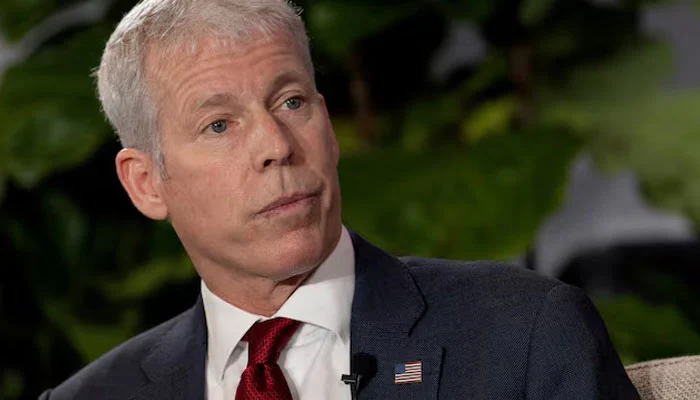
During the Goldman Sachs Energy, CleanTech & Utilities Conference in Miami, U.S. Energy Secretary Chris Wright stated, “To bring about the necessary changes in Venezuela, we must have leverage and control over its oil sales.” He explained that the revenue generated would be used not only to stabilize Venezuela’s economy but also to compensate oil giants like ExxonMobil and ConocoPhillips for losses incurred when their assets were nationalized by Hugo Chavez nearly twenty years ago.
U.S. Vice President JD Vance added, “Controlling Venezuela’s oil means controlling the country.” He described this approach as a way to apply significant pressure without risking American lives, saying, “We manage energy resources and instruct the regime: ‘You can sell the oil if it aligns with America’s national interests; if not, you can’t sell it.’”
Democrats have criticized this tactic. Connecticut Senator Chris Murphy compared it to “stealing Venezuela’s oil at gunpoint.” Industry analysts warn that such policies could lead to instability, especially as Venezuela balances its condemnation of Maduro’s government with the US’s strategic moves.
Venezuela, sitting atop the world’s largest oil reserves, currently produces only about 1% of global oil, a sharp decline from the 1970s when production reached 3.5 million barrels daily, mainly due to decades of mismanagement and underinvestment.
The U.S. energy secretary announced that the initial plan involves marketing stored Venezuelan oil supplies before selling ongoing production indefinitely, with proceeds deposited into accounts under U.S. control. This process has already begun, with major commodity traders and financial institutions involved.
Wright mentioned ongoing discussions with U.S. oil companies to explore how they can support long-term efforts to increase Venezuelan oil output. He envisions the country becoming a prosperous, peaceful energy powerhouse with extensive resources.
Recently, Washington agreed with Caracas to export up to $2 billion worth of Venezuelan crude to the U.S., an effort by interim President Delcy Rodriguez to comply with Trump’s demand that Venezuela open its oil industry to U.S. companies or face increased military pressure.
President Trump announced via Truth Social that Venezuela plans to use proceeds from oil sales to buy American products, calling it a smart and beneficial decision for both nations.
Venezuela’s national oil company, PDVSA, is negotiating with the U.S. for future oil sales, with the expectation that cargoes will be sold at fair market prices. Shares of U.S. refiners Marathon Petroleum, Phillips 66, and Valero Energy have risen between 2.5% and 5% in response.
Additionally, President Trump is scheduled to meet this Friday with top executives from ExxonMobil, ConocoPhillips, and Chevron at the White House to discuss strategies for boosting Venezuela’s oil production. All three firms have prior experience operating within Venezuela’s oil sector, though they have declined to comment publicly.
Wright noted he spoke with these companies’ CEOs immediately after Maduro’s removal, emphasizing their potential role in aiding Venezuela’s oil sector recovery. While they are unlikely to invest billions immediately, their expertise and advice are seen as crucial.
He also indicated that part of the revenue from Venezuelan oil sales might be used later to compensate ExxonMobil and ConocoPhillips for their losses, but only after the country’s economy stabilizes. Currently, Chevron remains the only major U.S. oil company still operating in Venezuela.
Historically, Venezuela produced around 3.5 million barrels per day in the 1970s, but mismanagement and limited foreign investment have diminished that to roughly 1.1 million barrels daily last year. Wright believes that with additional equipment and technology, short-term production increases are feasible, but a full recovery to historic levels will take years.
 ChatGPT
 Perplexity
 Gemini AI
 Grok AI