
Select Language:
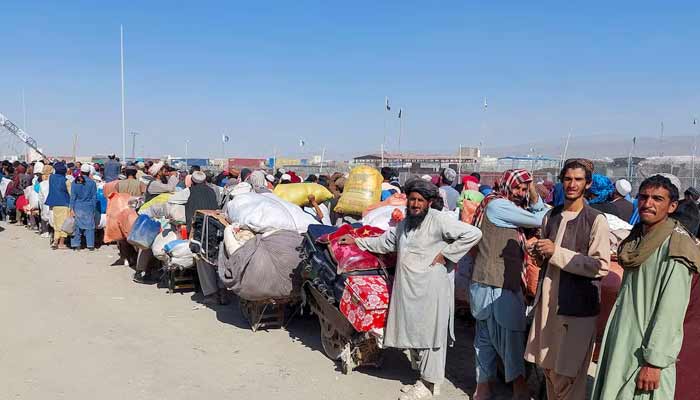
Last year, approximately 150,000 Afghans returned from Pakistan and Iran, with the rapid scale of migration worsening Afghanistan’s already critical situation, according to the UN refugee agency. Both Pakistan and Iran, after years of hosting Afghans fleeing internal crises, have intensified deportations, forcing millions back into a country struggling to support them.
Arafat Jamal, UNHCR’s representative for Afghanistan, stated during a Geneva press briefing, “So far this year, nearly 150,000 Afghans have gone back from Iran and Pakistan.” He expressed concern about these high numbers amid the harsh winter conditions, with freezing temperatures and heavy snowfall.
He added, “These returns come on top of an unprecedented total — 2.9 million people in 2025, bringing the overall number to around 5.4 million since October 2023.” Jamal highlighted that the returnees are facing extremely tough circumstances, whether they arrive with family or alone, as Afghanistan remains plagued by poverty and environmental challenges.
“The pace and volume of these returns have deepened Afghanistan’s crisis, which is compounded by worsening humanitarian and human rights issues—especially for women and girls—a fragile economy, and frequent natural disasters,” Jamal said. Babar Baloch, a UNHCR spokesperson, told AFP that the number of returnees has increased by more than 50% compared to this time last year when just under 100,000 had returned.
According to a UNHCR survey, many families reported lacking proper civil documentation, and over 90% are living on less than five dollars a day. Jamal expressed serious concern about the sustainability of these returns, noting that some are already leaving Afghanistan once again. “These decisions to leave are driven not by a desire to go but by the reality that many cannot rebuild a decent, dignified life here,” he explained.
The agency is prioritizing efforts to support the reintegration of returnees. However, it has called for $216 million to assist displaced people and returnees across the country this year, with only about 8% of that amount currently funded.
Jamal emphasized the urgency of action, stating, “This is a critical moment to intervene, capitalize on opportunities for long-term solutions, and address displacement for Afghan returnees—many of whom have been in exile for years or decades.”
 ChatGPT
 Perplexity
 Gemini AI
 Grok AI