Select Language:
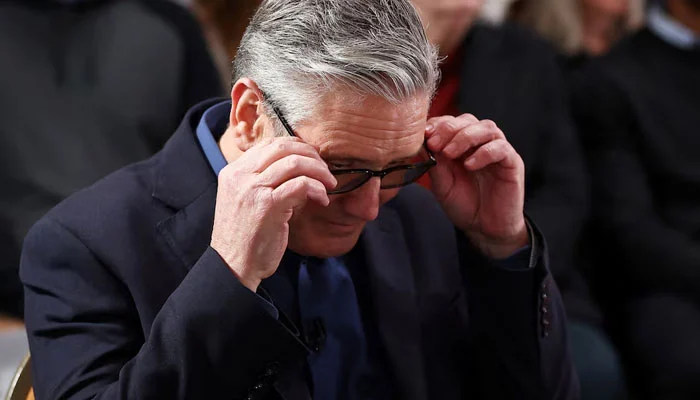
UK Prime Minister Keir Starmer insists he won’t back down after a close ally called on him to quit amid allegations linking him to the Jeffrey Epstein scandal.
Top government ministers unified support for him during the most severe crisis of his 19-month tenure, as a far-right movement gains traction in the polls.
“I fought hard to bring change to our nation; I won’t give up my mandate or responsibility,” Starmer told Labour Members of Parliament at a pivotal meeting, where he was met with applause. He seemed resolute, claiming he’s “won every fight I’ve faced.”
Earlier, Scottish Labour leader Anas Sarwar urged Starmer to step down, criticizing his decision to appoint Peter Mandelson as U.S. ambassador, knowing Mandelson’s past connections to convicted sex offender Jeffrey Epstein.
“The distraction needs to end, and leadership in Downing Street must change,” Sarwar stated at a Glasgow press conference, becoming the highest-ranking Labour figure to publicly push for Starmer’s departure.
Several cabinet members have since voiced backing for the prime minister, including Deputy David Lammy, Foreign Secretary Yvette Cooper, and Finance Minister Rachel Reeves. Angela Rayner, a prominent left-wing figure, and Interior Minister Shabana Mahmood, both potential successors, affirmed their full support for Starmer.
Earlier Monday, Starmer lost his second top aide in two days when Communications Director Tim Allan resigned after just a few months. On Sunday, Chief of Staff Morgan McSweeney stepped down over his advice to appoint Mandelson.
McSweeney’s exit leaves Starmer without one of his closest advisers, the person who helped shift Labour to the center after Jeremy Corbyn’s leadership in 2020. His short tenure has been marked by staff turnarounds, policy reversals, and missteps that have hurt his popularity.
Opposition leader Kemi Badenoch called Starmer’s position “untenable,” while Nigel Farage of Reform UK predicted his leadership was “coming to an end.” Labour has consistently trailed Farage’s anti-immigration party by double digits in polls over the past year.
On the streets of London, 30-year-old James Lyon, who works in creative industries, criticized the Mandelson appointment, saying, “He’s let us down with his judgment.” Meanwhile, 53-year-old IT business owner Anil Passi believed Starmer shouldn’t resign, explaining, “He supported someone in good faith, and that person let him down. It’s unfair to push him out over this.”
In speeches, Starmer frames the fight with Reform UK as the “battle of our lives,” with the party aiming to boost its support in upcoming local elections. Last year, he dismissed Mandelson after documents revealed his ties to Epstein, including alleged leaks of confidential UK government info during Mandelson’s time as a minister, particularly around the 2008 financial crisis.
Mandelson, 72, faces a police investigation for misconduct related to his links with Epstein. Authorities raided two of his properties but have not arrested him. Starmer, a former human rights lawyer, has apologized to Epstein’s victims and accused Mandelson of lying about the extent of his relationship with Epstein during vetting for his diplomatic role.
The government plans to release tens of thousands of emails and documents regarding Mandelson’s appointment, possibly intensifying pressure on Starmer and other senior officials.
Several Labour backbenchers, especially from the party’s left, suggest Starmer should follow McSweeney out the door, but no clear successor is apparent, and party rules complicate leadership challenges. The party also faces an important by-election on February 28 and local elections in May, including in Scotland, where Labour is expected to lose to the Scottish National Party competing for independence.
The next general election isn’t scheduled until 2029.
 ChatGPT
 Perplexity
 Gemini AI
 Grok AI