Select Language:
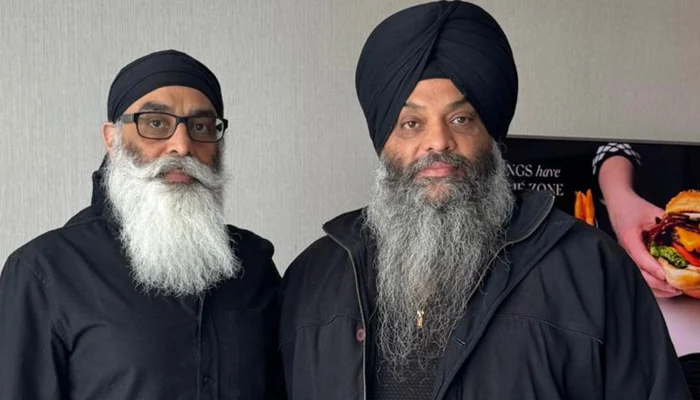
A high-profile Khalistani Sikh activist in the UK has been warned by British intelligence that he is under threat from Indian government agents operating in the UK. Paramjeet Singh Pamma, who coordinates the Khalistan Referendum campaign across the UK and Europe, and is closely connected to the late Hardeep Singh Nijjar and Gurpatwant Singh Pannun, has been advised to enhance his security following intelligence indicating imminent danger. This security alert reportedly comes from MI5, the UK’s primary domestic security agency.
According to The Guardian, the threat level to Pamma is so severe that he no longer resides with his family in West London near Southall Gurdwara, following police recommendations. He is also advised to keep his location confidential due to ongoing threats tied to his activism for Khalistan and the referendum movement.
Pamma stated that the threats are linked to ongoing efforts by the Indian government to suppress diaspora voices, describing this repression as relentless and crossing international borders, now extending to his family. He reports that he regularly notified UK police about these threats, but authorities only began to treat his concerns with seriousness after the 2023 assassination of Nijjar in Canada, which Canadian officials linked to Indian agents. The U.S. justice system has also accused an Indian government operative of plotting the assassination of Gurpatwant Singh Pannun on U.S. soil.
The UK government has refused to comment on individual cases but expressed pride in its diverse communities, emphasizing that safeguarding their safety remains a top priority.
Historically, India has been wary of the diaspora-led Sikh nationalist movement advocating for an independent Khalistan in Punjab, northwest India. In 1985, Khalistani militants carried out a plane bombing that resulted in the deaths of 329 people—the deadliest aviation attack before 9/11.
Indian media previously linked Pamma to fundraising activities for Babbar Khalsa International, which was responsible for that bombing, a claim he dismisses as false propaganda. He condemned terrorism and welcomes any investigations relating to him.
Pamma’s brother was killed by Indian police in 1991 due to his Khalistan activism. Pamma was detained and tortured multiple times in India before fleeing to the UK, where he received political asylum in 2000. In 2010, Indian authorities accused him of involvement in a murder, but UK counter-terrorism police found no evidence against him. Similarly, a 2015 arrest in Portugal was dismissed by a judge.
That same year, Indian diplomat Samant Goel approached Pamma in London, pressuring him to abandon Khalistan, which Pamma refused. Goel later became the head of India’s external intelligence agency, RAW, and reportedly ordered assassination attempts on Khalistan activists abroad, including in the U.S., Canada, and the UK.
MI5 reports an increased focus by foreign governments on dissidents within the UK, with investigations into state-sponsored threats rising by 48% since 2022. The Joint Committee on Human Rights flagged India as a major concern in its 2024-25 report on international repression.
The Guardian notes that as the UK deepens ties with Modi’s Hindu nationalist government, concerns about such threats are intensifying. Recent incidents include the sudden death of Sikh activist Avtar Singh Khanda in Birmingham after alleged harassment by Indian police, and credible threats reported to police by Gurcharan Singh, another prominent activist, who is under constant protection in Slough. Singh’s wife died earlier this year under circumstances he finds suspicious and comparable to Khanda’s case. The Indian High Commission in London declined to comment.
 ChatGPT
 Perplexity
 Gemini AI
 Grok AI