Select Language:
A sudden shift in Iran policy by U.S. President Donald Trump on Monday stunned global markets, marking one of his most dramatic reversals. Since regaining power last year, Trump has relied heavily on instinct-driven decisions, often making contradictory statements about Middle East conflicts, including a declaration on March 13 that the war would end when he “felt it in his bones.”
Garret Martin, a professor of international relations at American University, notes, “Trump is a master of sudden pivots and switches, making it difficult to discern whether there’s a clear strategy or just constant improvisation.” These abrupt changes usually follow a pattern: the president issues threats—diplomatic, economic, or military—often with ultimatums that surprise the international community, then unexpectedly backtracks, claiming to have secured concessions that are rarely disclosed. This causes markets to fluctuate wildly.
On Monday, oil prices fell sharply while stock markets surged after Trump announced on his social platform that the U.S. had engaged in talks with Iran about ending the conflict. Brent crude dropped over 14%, and West Texas Intermediate lost nearly 10%, while the Dow Jones soared by 700 points.
Just days earlier, Trump had given Iran a 48-hour deadline to reopen the Strait of Hormuz, a critical oil shipping lane, threatening massive strikes against Iranian infrastructure without mentioning negotiations. Yet, on Monday, he set a new five-day deadline—giving space for ongoing talks—and spoke of “very productive” discussions with “highly respected” Iranian officials, who were not identified. However, Iranian officials denied any negotiations were active, tempering market enthusiasm.
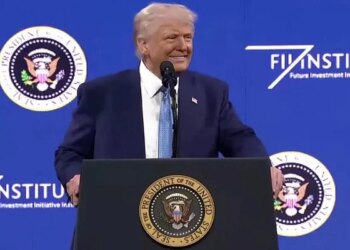
Trump boasted in Memphis about his negotiation skills rather than presenting any specific treaties or agreements. “My whole life has been about negotiation, and with Iran, we’ve been negotiating for a long time,” he said. “This time, they’re serious.”
This pattern of behavior is often summarized with the acronym “TACO,” coined by Financial Times journalist Robert Armstrong in May 2025—standing for “Trump Always Chickens Out.” The term originated from Trump’s previous threats, such as imposing global tariffs or demanding the U.S. take over Greenland, which he ultimately abandoned to avoid market chaos.
Initially, “TACO” referred to a market strategy—capitalizing on asset declines triggered by Trump’s aggressive announcements to buy low, hoping to sell at a profit once he reversed course. Many of his U-turns, including those involving relations with Greenland or Powell’s interest rate policies, create market turbulence but often lack accompanying deals, leaving allies and rivals uncertain about the stability of agreements, known for their fleeting nature.
Politically, analysts think Trump’s reversals—like backing down on Iran—stem from various pressures: markets reacting negatively, Gulf nations exerting influence, and internal conflicts within his MAGA movement over his handling of the crisis. According to Martin, these factors often lead him to abandon previous threats to maintain political and market stability.
 ChatGPT
 Perplexity
 Gemini AI
 Grok AI