Select Language:
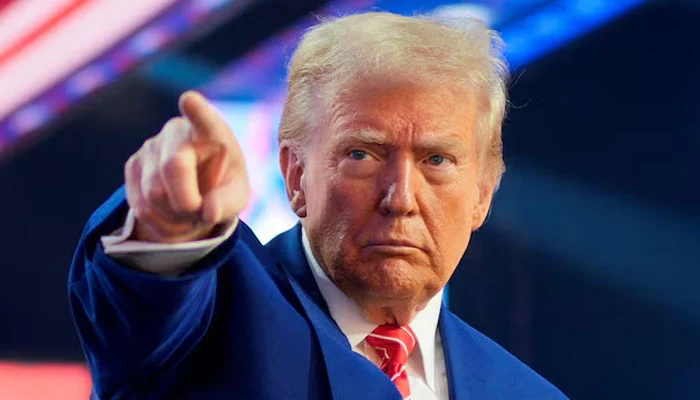
WASHINGTON: Donald Trump’s escalating threats to devastate Iran have sparked fears over how far the U.S. might go militarily to force Iran into compliance.
On Tuesday, Trump declared that “an entire civilization will perish” if Iran refuses his ultimatum to accept U.S. demands for war. Vice President JD Vance added that Washington still has more “tools in our toolkit” ready to be used against Tehran.
New Military Options
The U.S. has already deployed a broad range of military assets targeting Iran, including advanced aircraft, cruise missiles, stealth bombers, and attack drones. Daniel Schneiderman, Director of Global Policy Programs at Penn Washington (the University of Pennsylvania’s policy center), stated that the U.S. has “employed many of its most sophisticated capabilities in this conflict.” These include “air assets, cruise missiles, stealth bombers, and one-way attack drones,” he noted.
He suggested there may be “specialized hypersonic weapons or other bespoke systems” available for specific strikes. However, Schneiderman emphasized that “unless nuclear weapons are involved, the administration appears to have not placed limits on what it might employ.”
There’s also been no official ruling out the possible deployment of ground troops, which would signify a major escalation.
Etienne Marcuz, an analyst with France’s FRS think tank, highlighted that “cyber warfare remains a potential option” in the U.S.’s arsenal.
Trump has previously referred to a weapon called the “discombobulator,” used during the January operation aimed at capturing Venezuelan leader Nicolás Maduro, which reportedly disabled military equipment in Venezuela.
Nuclear Threats and Possibilities
Trump’s remarks about erasing Iranian civilization have led to speculation about the potential use of nuclear weapons. The U.S. has both strategic warheads capable of destroying cities and smaller tactical nuclear devices intended for battlefield use.
Historically, the U.S. is the only country to have used nuclear weapons during combat — dropping two bombs on Japan in World War II. Last year, Trump authorized the resumption of nuclear testing.
The White House quickly dismissed suggestions that nuclear weapons might be used against Iran, emphasizing that “nothing” in Vance’s warnings indicates such an action.
Schneiderman considers it “highly unlikely” that nuclear weapons would be used against Iran, calling crossing that “Rubicon” a “last resort.” He warned that a nuclear strike would lead to “massive losses of human life, global economic upheaval, environmental contamination from nuclear fallout, and the crippling of Iran’s oil and gas exports.”
Marcuz agreed, saying the political fallout of such a move would be immense and could set a dangerous precedent, possibly inciting similar actions from Russia in Ukraine.
Potential U.S. Actions
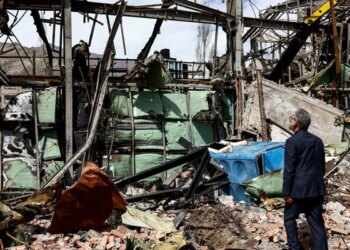
Trump has already warned of bombing Iran’s bridges, power plants, and other civilian infrastructure, potentially bringing these vital systems to a standstill. If the current deadline passes without a deal, Schneiderman warned, “the U.S. may escalate attacks on dual-use infrastructure like bridges and energy facilities.”
He also pointed out that such strikes could inflict severe damage on Iran’s infrastructure and worsen living conditions for its citizens, with limited chances of achieving strategic success. “The harm to civilians would likely be significant,” he added.
 ChatGPT
 Perplexity
 Gemini AI
 Grok AI