Select Language:
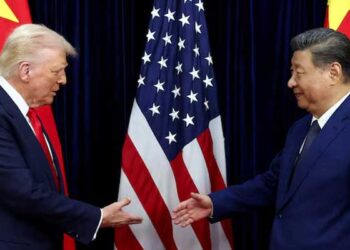
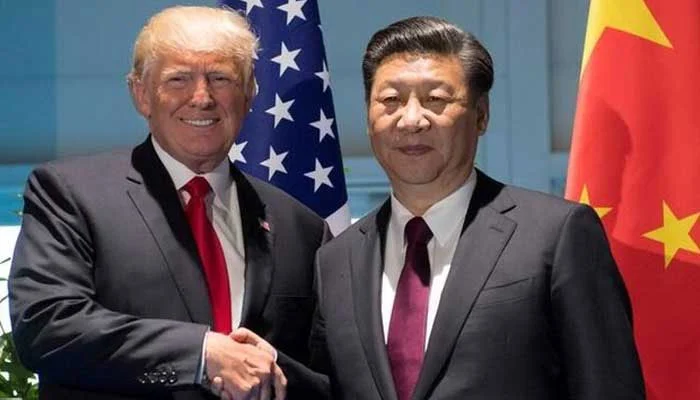
President Donald Trump and Chinese President Xi Jinping shake hands before their meeting on the sidelines of the G20 Summit in Hamburg, Germany on July 8, 2017. — Reuters
– Trump believes the US will manage relations with China smoothly.
– The US Treasury Secretary has a conversation with China’s Vice Premier.
– The World Trade Organization calls on the US and China to reduce trade tensions.
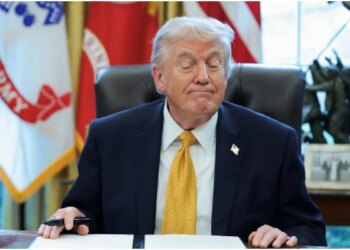
The US president has stated that a proposed 100% tariff on Chinese goods can’t be maintained long-term. He blames Beijing for the recent deadlock in trade negotiations, which was sparked by China’s tightening restrictions on rare-earth exports. When asked if such tariffs could be sustainable and how they might impact the US economy, Trump responded, “It’s not sustainable, but that’s the number we’re working with.” He added in an interview with Fox Business Network that China compelled him to impose these tariffs. Last week, Trump announced additional tariffs of 100% on Chinese imports, along with new export restrictions on critical software, set to take effect before existing tariffs expire in nine days. These measures respond to China’s significant expansion of export controls over rare earth elements, crucial for technology manufacturing, as China dominates its global market. Trump also confirmed plans for a meeting with Xi Jinping in South Korea in two weeks and expressed admiration for the Chinese leader. On the “Mornings with Maria” show, he emphasized the importance of a fair deal, stating, “I think we’ll be fine with China, but it has to be a fair deal.” Later, during a White House lunch with Ukrainian President Volodymyr Zelensky to discuss resolving Ukraine’s conflict with Russia, Trump noted, “China wants to talk, and we like talking to China.” His more conciliatory tone and the announcement of a meeting helped boost early Wall Street trading, reversing some of the week’s losses caused by rapid tariff escalations and banking sector concerns.
US Treasury Secretary Scott Bessent had a candid discussion with China’s Vice Premier He Lifeng, promising an in-person meeting next week to continue trade talks. The WTO’s director-general, Ngozi Okonjo-Iweala, appealed to the US and China to de-escalate trade disputes, warning that a complete separation of their economies could cut global economic output by 7% over time. She expressed concern over the recent rise in tensions and noted that the global trade body has been encouraging dialogue between the two nations. Meanwhile, tensions persist as US officials criticize China’s state-led economic practices, urging the IMF and World Bank to adopt a tougher stance on China’s external and internal trade policies, which are believed to have led to excess manufacturing capacity flooding global markets with cheap products. China’s Commerce Ministry accused the US of undermining the rules-based global trading system, vowing to increase disputes through the WTO and calling for the US to reverse measures that violate non-discrimination rules and align its policies with WTO commitments. Earlier in the week, Bessent accused a top Chinese aide of being “unhinged” during recent negotiations, a claim China responded to, saying Bessent’s remarks “seriously distort the facts.”
 ChatGPT
 Perplexity
 Gemini AI
 Grok AI