Select Language:
- U.S. military bases in Gulf nations become targets.
- Iran nearly halts shipping through the Strait of Hormuz.
- Democrats report ‘no immediate threat.’
President Donald Trump was advised that an attack on Iran could provoke retaliation against U.S. Gulf allies, even though he claimed Monday that Tehran’s response took him by surprise, according to a U.S. official and two sources familiar with intelligence reports.
Early assessments did not guarantee Iran’s response but listed it as a potential outcome, one source explained, with anonymity requested to discuss sensitive intelligence.
Trump on Monday twice stated that Iran’s retaliatory strikes against Qatar, Saudi Arabia, the United Arab Emirates, Bahrain, and Kuwait caught the administration off guard. The first instance was during a White House Kennedy Center board meeting.
“Iran wasn’t supposed to target all these other Middle Eastern countries,” he said. “Nobody expected that. We were stunned.”
This contradicts other claims by the administration, which suggested Iran might soon develop a missile capable of reaching the U.S. mainland and would need two to four weeks to manufacture a nuclear weapon, with intentions to use it.
These assertions, along with statements citing an imminent threat from Iran, have been used to justify the U.S. and Israel’s decision to commence military operations against Iran on February 28.
Two sources familiar with the briefings said Trump was also informed that Iran would likely attempt to close the strategically important Strait of Hormuz, a key route for global oil supplies.
Over recent weeks, Iranian drones and missile strikes have hit targets across Gulf states, including U.S. military bases, an Emirati installation hosting French troops, civilian infrastructure such as hotels, airports, and energy facilities.
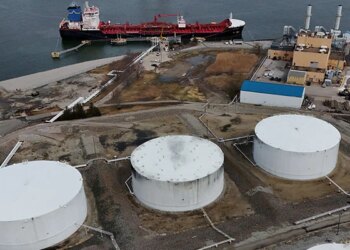
Iran has nearly halted all shipping through the Strait of Hormuz, through which about 20% of the world’s oil passes, leading to a surge in global energy prices.
Democratic lawmakers, after briefings about the war last week, stated they saw no evidence of an immediate threat requiring military action by the U.S. and Israel.
The White House has not responded to a request for comment. The Office of the Director of National Intelligence also declined to comment.
Warnings of a Potential Regional War
A U.S. official indicated that Trump was briefed that striking Iran could ignite a wider regional conflict, prompting Iranian retaliation against Gulf capitals, especially if Tehran perceives those countries support or condone U.S. attacks.
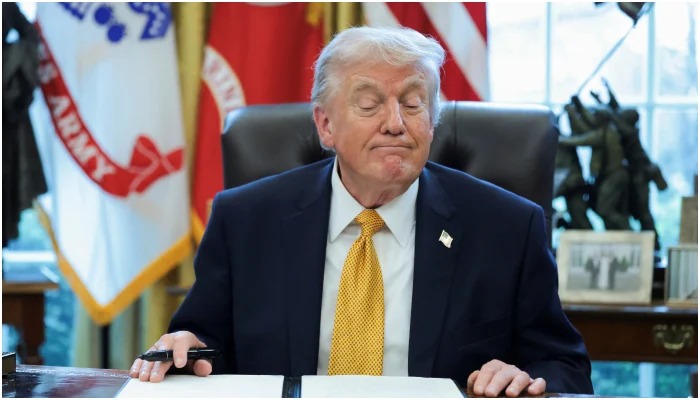
Later Monday, during a signing event in the Oval Office, Trump repeated that no one had warned him about the risk of Iranian retaliation. When asked if he was surprised no one informed him beforehand, he responded:
“Nobody, nobody, no, no, no. The greatest experts, nobody thought they were going to hit.”
An additional source said that prior to the U.S.-Israeli strikes, intelligence assessed that Israel’s plan to target high-level Iranian leaders could provoke retaliation against U.S. military and diplomatic sites.
Following the strikes, some regional embassies did not have personnel evacuated until after hostilities commenced.
The intelligence community also warned that Iran might extend its retaliation to include American allies in the region.
 ChatGPT
 Perplexity
 Gemini AI
 Grok AI