Select Language:
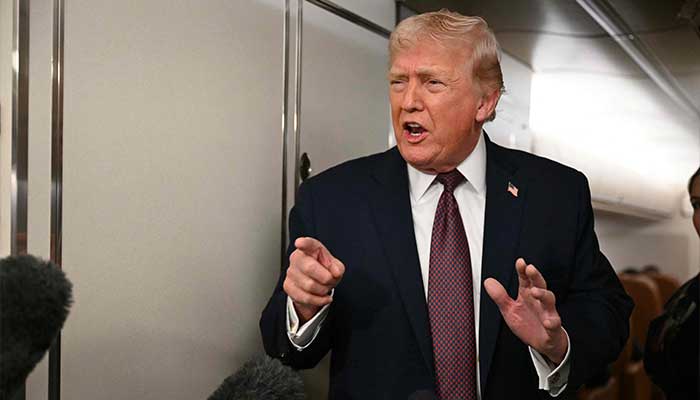
A series of events are unfolding as President Donald Trump considers possible military options against Iran amid escalating tensions. On Sunday, Trump indicated he’s evaluating strong responses after reports emerged of violent suppression of nationwide protests in Iran. When asked if Iran had crossed his previously established red line—referring to the killing of protesters—Trump responded, “It appears they are starting to.” He emphasized that the military is thoroughly reviewing options and a decision will be made soon.
Trump also mentioned that Iran’s leadership reached out seeking “to negotiate” following his threats of military action during the unrest. He stated, “The leaders of Iran called yesterday, and a meeting is being organized… They want to talk,” but added, “We might have to act before that meeting happens.”
A US official revealed that Trump intends to meet with senior advisers this Tuesday to discuss Iran-related strategies. Reports from The Wall Street Journal suggest potential measures could include military strikes, covert cyber operations, expanded sanctions, and cyber support for opposition groups.
Iran’s parliamentary speaker, Mohammad Baqer Qalibaf, issued a stern warning to Washington against miscalculations, asserting that any attack on Iran would trigger retaliation against Israel and US military assets in the region. He is a former commander of Iran’s elite Revolutionary Guards.
Meanwhile, Iran has declared three days of national mourning for those killed during the two weeks of protests, labeling the fallen—including security personnel—as “martyrs.” The regime describes its efforts to quell unrest as a “national resistance” movement against the United States and Israel, the latter referred to using the regime’s term for the Zionist regime.
President Masoud Pezeshkian called on Iranians to participate in a “national resistance march” scheduled for Monday, aimed at condemning the violence attributed to “urban terrorist criminals.” The protests initially ignited over economic hardships but have since transformed into a broader challenge to Iran’s theocratic leadership since the 1979 revolution. These demonstrations mark one of the most significant threats to Supreme Leader Ayatollah Khamenei’s authority, especially after an Israeli-backed 12-day conflict with Iran in June.
Despite a nationwide internet shutdown lasting over 72 hours, protests have intensified, with activists warning that suppressed communications may mean the actual number of casualties is much higher. The unrest continues to pose a major challenge to the regime’s stability amidst ongoing regional tensions.
 ChatGPT
 Perplexity
 Gemini AI
 Grok AI