Select Language:
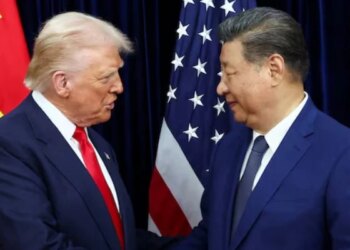
U.S. President Donald Trump announced on Saturday that he would impose a 100% tariff on goods imported from Canada if the country proceeds with a trade agreement with China. He warned Canadian Prime Minister Mark Carney that such a move could threaten Canada’s economy.
“China will completely dominate Canada, wiping out their businesses, social structure, and way of life,” Trump posted on Truth Social.
“If Canada makes a deal with China, a 100% tariff will be enforced on all Canadian products entering the U.S.”
In a video posted on Saturday, Carney encouraged Canadians to support domestic companies but did not directly address Trump’s tariff warning.
“Our economy is under threat from abroad, so Canadians have chosen to focus on what we can control,” Carney stated. “We can’t control other nations’ actions, but we can be our own best customer.”
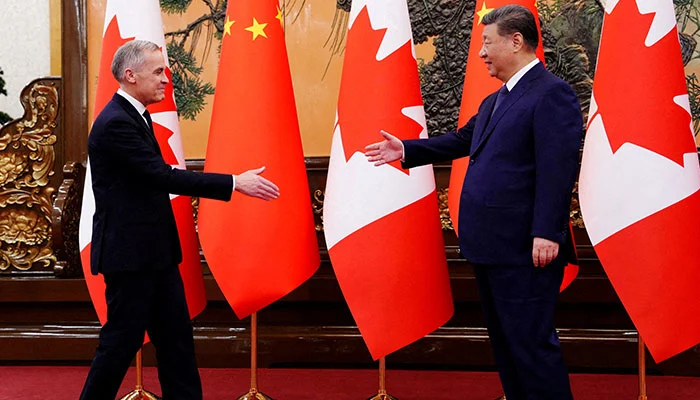
Earlier this month, Carney traveled to China in an effort to repair the strained relationship between the two countries and successfully negotiated a trade deal with China, Canada’s second-largest trading partner after the U.S.
Following Carney’s visit to China, Trump appeared to show support. “It’s good for him to sign a trade agreement,” Trump told reporters at the White House on January 16. “If you can reach an agreement with China, you should go for it.”
Canada’s Trade Minister Dominic LeBlanc clarified on Saturday that the agreement achieved was primarily about resolving key tariff issues, not a free trade deal.
“The focus was on resolving several important tariff issues,” LeBlanc stated on X (formerly Twitter).
The Chinese embassy in Canada indicated that China is prepared to work with Canada to implement the leaders’ shared consensus.
Tensions between the two countries increased recently following Carney’s criticism of Trump’s efforts to acquire Greenland.
Increased Pressure on Canadian Industries
Trump also implied that China might try to use Canada as a conduit to avoid U.S. tariffs.
“If Governor Carney thinks he’s going to make Canada a ‘Drop-Off Point’ for Chinese goods to enter the U.S., he’s mistaken,” Trump tweeted. He referred to Carney with a nickname linked to previous calls for Canada to become the 51st U.S. state.
Later on Saturday, Trump emphasized, “The last thing the world needs is China taking over Canada. That is NOT going to happen!”
Should Trump implement the proposed tariffs, it would sharply increase costs for Canadian exports, impacting sectors like metals, automotive manufacturing, and machinery.
Until recently, relations between Carney and Trump were relatively cordial; however, Carney’s recent outspoken opposition to Trump’s Greenland ambitions marked a change.
At the World Economic Forum in Davos, Carney called for nations to accept that the global rules-based order is over, highlighting Canada’s potential role as a middle power working in concert with others to resist American dominance.
He warned, “Middle powers must act together because if you are not at the table, you are on the menu,” eliciting a standing ovation from many international leaders and industry figures.
Trump responded at Davos, asserting that “Canada’s existence depends on the United States,” a statement Carney rejected, affirming Canada’s independence and success: “Canada thrives because we are Canadian.”
Since then, Trump has taken steps such as revoking an invitation for Canada to join his Board of Peace, a group he intends to consult regarding international conflicts and the future of Gaza.
Despite a promising start last year, Trump has since dismissed the US-Canada-Mexico trade agreement as “irrelevant,” throwing numerous tariff threats since regaining the presidency—though many have been paused or withdrawn amid negotiations.
Most recently, Trump temporarily backed away from threatening tariffs on European allies after NATO leaders pledged increased Arctic security.
The Canadian Chamber of Commerce expressed hope that the two governments can quickly resolve these issues to reduce uncertainty and protect industries facing immediate risks.
 ChatGPT
 Perplexity
 Gemini AI
 Grok AI