Select Language:
- War triggers a stock market slump and drives oil prices up.
- If conflict resumes, Iran will face even greater repercussions, warns Trump.
- Trump tells lawmakers that the campaign will be a “short-term endeavor.”
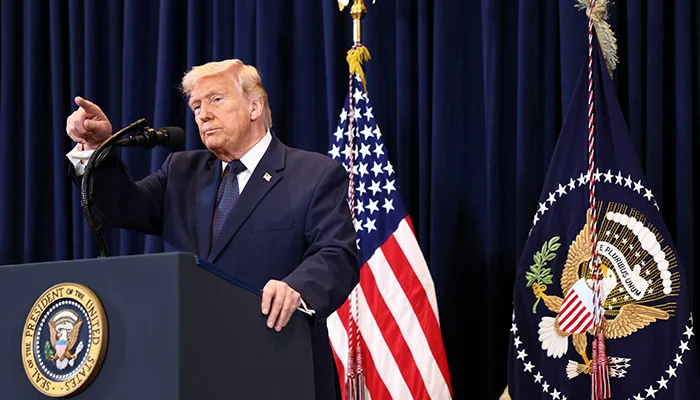
On Monday, President Donald Trump indicated that U.S. military actions in Iran are nearing an end, aiming to reassure markets destabilized by ongoing conflicts across the Middle East.
The escalation had previously caused stocks to tumble and oil prices to spike as Tehran, under new leadership by Mojtaba Khamenei, launched renewed missile strikes on neighboring Gulf nations and hinted that the crucial Strait of Hormuz might stay closed.
Following Trump’s comments, Wall Street recovered into positive territory, with markets in Tokyo and Seoul also rallying on Tuesday, despite the president’s persistent threats to intensify the campaign if Iran refuses to comply.
Meanwhile, oil prices corrected sharply, dropping by as much as 5% after surging past $100 per barrel—a level last seen during Russia’s invasion of Ukraine in 2022.
“This will end soon, and if it restarts, they will be hit even harder,” Trump told reporters in Florida after telling lawmakers the operation would be brief.
Iran’s Revolutionary Guards responded Tuesday that they would be the ones deciding when the war concludes.
This statement came on the first day of power for Mojtaba Khamenei, the 56-year-old son of Iran’s late leader Ali Khamenei, amid new missile and drone attacks targeting Saudi Arabia, Bahrain, Qatar, the UAE, and Israel.
An additional missile was fired at Turkey, a NATO member, but was intercepted before reaching its target, marking the second such incident in five days.
Diplomatic efforts on Monday concentrated on the heavily strategic Strait of Hormuz, which has been largely closed to oil tankers—shaking global markets.
French President Emmanuel Macron announced that France and its allies were preparing a primarily defensive mission to reopen the Strait, through which about 20% of the world’s oil typically passes. The plan involves escorting ships once the most intense phase of conflict subsides, though experts warn that this could place naval personnel at risk from Iranian fire.
Iran’s top foreign policy adviser, Kamal Kharazi, told CNN that Tehran is betting economic pressure will eventually force other nations to intervene and bring the war to an end.
Public Demonstrations
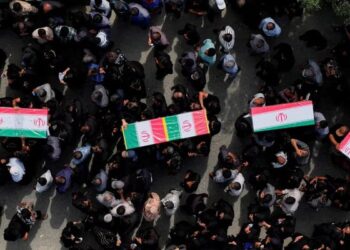
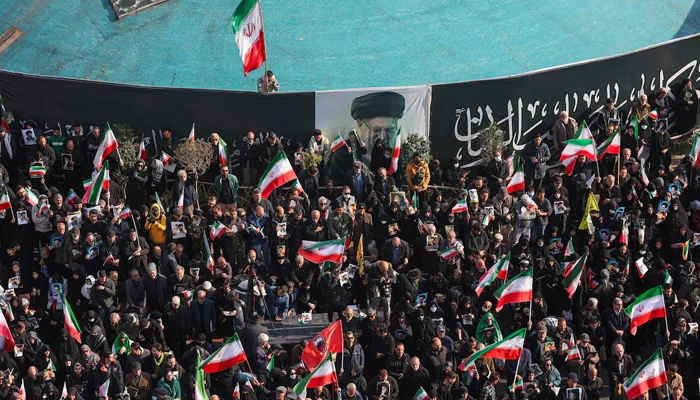
Following the appointment of Iran’s new supreme leader by its Assembly of Experts—the first change in 37 years—mass protests erupted. State media showed tens of thousands of supporters in Tehran celebrating Mojtaba Khamenei’s selection, many holding his picture.
Iran’s allies in Yemen’s Houthi movement and Lebanon’s Hezbollah pledged allegiance, while Russian President Vladimir Putin expressed “unwavering support” in a statement Monday.
Trump expressed disappointment over Khamenei’s appointment but hinted at the possibility of selecting a replacement within Iran, comparing the transition to recent developments in Venezuela as a successful model.
Oil and Security Risks
Global oil markets, policymakers, and central bankers are closely monitoring Middle Eastern developments, particularly the security of Gulf energy infrastructure vital to the world economy.
Since Iran blocked the Strait in retaliation for US-Israeli strikes, about 10 ships in or near the waterway have been targeted, according to shipping experts.
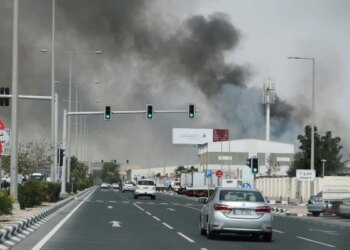
Major shipping company MSC announced it will halt some exports from the Gulf, requiring ships to unload goods. Bahrain’s state oil company, Bapco, also declared “force majeure” after strikes on its refinery ignited a fire, and similar declarations came from Qatar and Kuwait’s energy sectors, signaling potential disruptions.
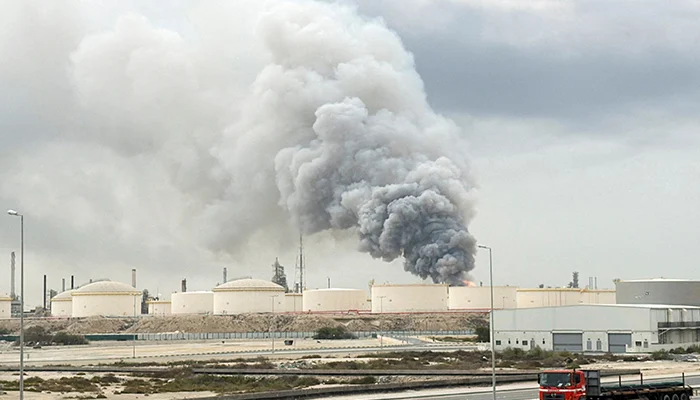
The Saudi defense ministry announced it thwarted a drone attack targeting an oil facility in the eastern part of the kingdom, near the UAE border.
Claims of Resistance
In Bahrain, authorities reported that an Iranian attack on a residential area in the capital, Manama, resulted in one death and injuries early Tuesday.
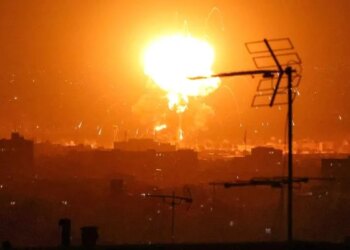
Earlier in Israel, around ten explosions were heard in Tel Aviv following military alerts triggered by inbound missiles from Iran. At least one person was injured by shrapnel, according to emergency services.
Israel responded by striking an Iranian missile launcher shortly after Iranian fire led to air raid warnings across various regions.
The conflict has spilled over into Lebanon, where ongoing clashes between Israeli forces and Hezbollah since March 2 have resulted in at least 486 deaths and over 1,300 injuries.
Lebanese President Joseph Aoun accused Hezbollah of aiming to destabilize the government, while the group’s parliamentary leader said resistance remains their only option.
 ChatGPT
 Perplexity
 Gemini AI
 Grok AI