Select Language:
A trip to Beijing is scheduled for May 14-15, according to the White House. Trump’s spokesperson mentioned that Xi Jinping understood the reason for the delay. Trump expressed anticipation that the visit to China would be “a monumental event.”
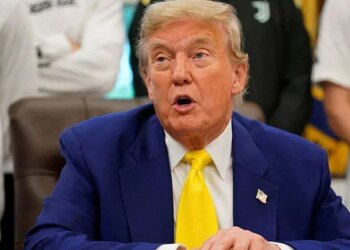
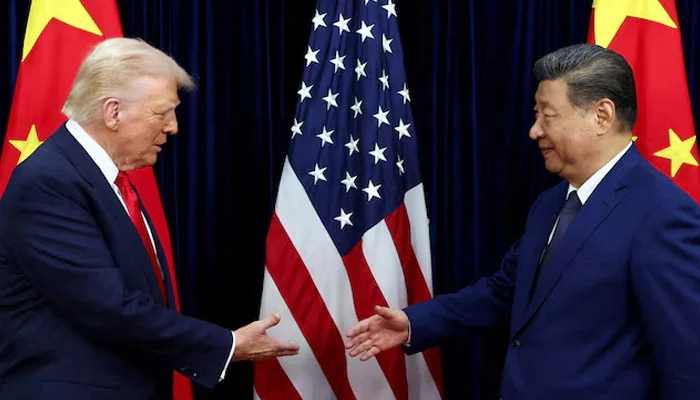
In a recent announcement, the U.S. President revealed that he will meet with Chinese President Xi Jinping in May during his first trip to China in eight years. Originally planned for the upcoming week, the trip was postponed due to the ongoing Iran conflict. Trump’s attempt to reschedule reflects his desire to project strength amid Middle Eastern tensions while managing the fragile relationship between the two largest economies.
Trump took to Truth Social on Wednesday to share that he would visit Beijing on May 14 and 15, and that he plans to host Xi Jinping for a reciprocal visit in Washington later this year.
“Our teams are wrapping up preparations for these historic visits,” Trump stated. “I am very much looking forward to spending time with President Xi in what I am sure will be a monumental event.”
China’s embassy said it had no further details about the visit, as Beijing usually keeps Xi’s schedule private until just a few days before events.
The trip had been on the calendar for some time and was part of a broader effort by Washington to reset relations within the Asia-Pacific region. However, a series of developments have continually shifted priorities. In February, the Supreme Court limited the president’s authority to impose tariffs, a tool Trump used in negotiations with this country’s third-largest trading partner. That same month, a joint military operation between the U.S. and Israel against Iran heightened tensions with Beijing, which relies on Iran for a significant portion of its oil.
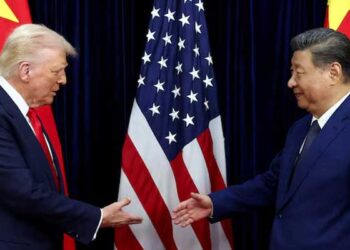
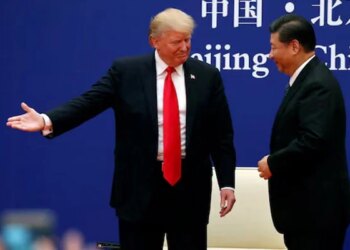
Trump’s last visit to China was in 2017—the most recent by a U.S. president. The upcoming trip in May will mark the first in-person talks since an October meeting in South Korea, where the leaders agreed on a trade truce.
While the trip will showcase many of Trump’s customary diplomatic styles, it is expected that tangible agreements may be reached in areas like agriculture exports and aircraft parts. Nonetheless, issues like Taiwan are unlikely to see significant progress; Trump has increased U.S. arms sales to Taiwan during his second term, angering Beijing, which claims the island as its territory.
It remains uncertain whether the Iran conflict will be resolved before the leaders meet in China. Trump has sought support from major oil-consuming countries, including China, to help counter Iran’s attempts to shut the Strait of Hormuz, but so far, most responses have been limited. China, which imported about 12 million barrels of oil daily in early 2026—the highest in the world—has not directly responded to Trump’s requests.
The White House indicated that Trump and Xi had discussed the possibility of rescheduling the trip. White House spokesperson Karoline Leavitt stated that Xi understood the reasons for the delay, emphasizing the importance of Trump being present during current military operations.
Overall, the upcoming visit is seen as a significant step amid ongoing global tensions, with both leaders expected to balance diplomatic gestures with addressing complex geopolitical issues.
 ChatGPT
 Perplexity
 Gemini AI
 Grok AI