Select Language:
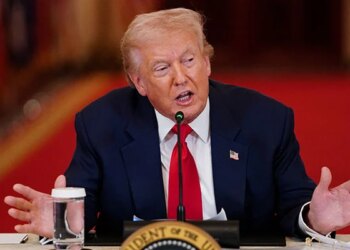
US President Donald Trump announced that tariffs will remain in place until the United States secures a deal to purchase Greenland. On Saturday, Trump stated on Truth Social that an extra 10% import tax would be imposed starting February 1 on goods from Denmark, Norway, Sweden, France, Germany, the Netherlands, Finland, and the UK—countries already subject to tariffs he previously enacted. These tariffs are set to rise to 25% on June 1 and stay in effect until a deal for Greenland’s sale is achieved.
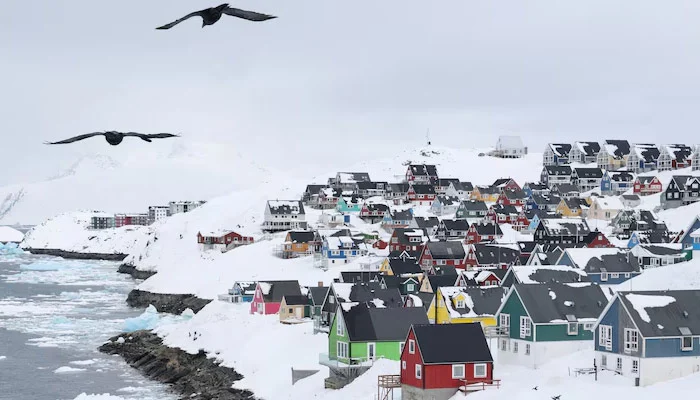
Trump has consistently maintained that he will accept nothing less than ownership of Greenland, an autonomous Danish territory. However, Danish and Greenlandic officials have reaffirmed that the island is not for sale and has no interest in joining the US.
Trump emphasizes Greenland’s strategic importance, citing its location and significant mineral resources as key reasons for US interest. He has not ruled out the possibility of using force to take control. This week, European countries sent military personnel to Greenland at Denmark’s request.
“The actions of these nations, who are engaging in this risky game, have created an unsustainable level of danger,” Trump said.
Protests erupted in Denmark and Greenland on Saturday, with demonstrators calling for the territory’s right to decide its own future. Many European leaders expressed concern that Trump’s threats could threaten NATO’s stability, especially since the countries involved have supported Denmark against the US’s diplomatic push.
Denmark’s Foreign Minister Lars Lokke Rasmussen described the announcement as surprising. UK Prime Minister Keir Starmer criticized Trump’s approach, stating on X that applying tariffs to allies over collective security issues is entirely wrong.
European Union officials, including President Ursula von der Leyen and European Council President Antonio Costa, issued statements affirming EU solidarity with Denmark and Greenland. They warned that such tariffs could damage transatlantic relations and provoke a dangerous spiral of retaliation.
Supporters from Norway, Sweden, France, and Germany reiterated their backing for Denmark, emphasizing that Greenland’s discussions should not involve tariffs. Cyprus, holding the EU presidency, announced an emergency meeting of ambassadors from all 27 member states scheduled for Sunday.
Trump’s tariff threats could jeopardize trade agreements he reached last year with the EU and the UK, which included base tariffs of 15% on European imports and 10% on most British goods. Trade experts express concern that dividing EU nations and bypassing legislative approval could undermine these agreements and the broader transatlantic partnership.
Over the past week, Trump hinted at using tariffs as a tool to pressure other nations, including the potential 25% tariffs on countries trading with Iran, although no formal legal basis for this has been disclosed. The US Supreme Court has been hearing cases on the legality of Trump’s sweeping tariffs, with a ruling expected to have significant impacts on international trade and presidential authority.
Greenland’s strategic position and resource wealth, combined with existing US military bases like Pituffik with around 200 personnel, have fueled speculation that Trump’s motives may extend beyond security concerns to territorial expansion. European officials and US senators have expressed skepticism, warning that division among allies benefits China and Russia.
EU foreign policy chief Kaja Kallas criticized Trump’s threats on X, emphasizing that the US’s actions risk benefiting adversaries. Senators Jeanne Shaheen and Thom Tillis also condemned the move, describing it as harmful to the US, its businesses, and its allies.
Expert analysts advise caution, suggesting Europe should wait and observe how the situation develops, noting that the threats have already tested EU unity and resilience.
 ChatGPT
 Perplexity
 Gemini AI
 Grok AI