Select Language:
- Iran warns U.S. bases and aircraft carriers will be targeted if attacked.
- Trump states he’s in communication with Iran but warns time is running out.
- Iran cautions that an American attack would prompt an immediate and decisive response.
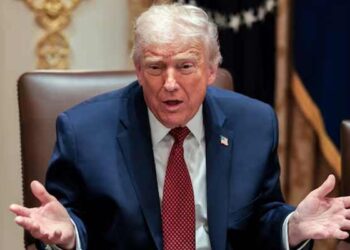
PARIS: U.S. President Donald Trump announced on Thursday his desire to avoid military conflict with Iran, which has issued threats to strike American military sites and ships if attacked.
Trump mentioned ongoing diplomatic discussions with Iran and suggested that a peaceful resolution might still be possible, despite earlier warnings that Tehran’s window for negotiations was shrinking as a large US naval fleet prepares in the area.
When asked about potential talks with Iran, Trump responded, “I have had, and I am planning on it.”
“We are deploying a group to Iran, and ideally, we won’t need to use it,” the President added during an interview at a documentary premiere about his wife, Melania.
Amid rising rhetoric from Brussels and Washington and Iran’s stark warnings, UN Secretary-General Antonio Guterres has called for renewed nuclear negotiations to prevent a regional crisis with devastating potential.
An Iranian military spokesperson warned that Tehran’s retaliation to any American attack would not be just limited strikes, as it was in June last year during a short Israeli-Iranian air confrontation, but would be an immediately executed, forceful response.
Brigadier General Mohammad Akraminia told Iranian state TV that U.S. aircraft carriers are vulnerable and that numerous American bases in the Gulf are within missile range of Iran’s medium-range weapons.
“If the Americans miscalculate, it won’t play out as Trump might imagine—quick operations followed by a tweet declaring the mission complete,” he stated.
Iranian officials have attributed recent protests to foreign influence, accusing certain agents of inciting riots and orchestrating terrorist acts that hijacked peaceful demonstrations driven by economic grievances.
Authorities acknowledge over 3,000 deaths during these protests, primarily among security personnel and civilians caught in the unrest, which they claim was sparked, in part, by foreign instigation.
In Tehran, billboards and banners have been erected to reinforce government messages, including a large poster depicting an American aircraft carrier being destroyed.
A regional official told AFP that the threat of a U.S. strike on Iran is very real, warning it would lead to regional chaos, economic downturns, and soaring oil prices.
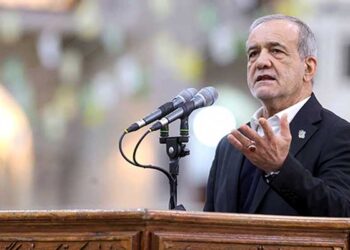
Qatar’s Emir Sheikh Tamim bin Hamad Al Thani and Iranian President Masoud Pezeshkian held a phone call to discuss measures toward de-escalating tensions and promoting regional stability, according to Qatar News Agency.
Trump had previously threatened military action if the protests, which intensified around December 29 and peaked on January 8–9, resulted in casualties among civilians.
Recently, his focus has shifted toward Iran’s nuclear program, which Western countries suspect aims to develop atomic weapons. On Wednesday, Trump declared that “time is running out” for Tehran to negotiate, signaling that the U.S. naval forces in the Middle East are “ready, willing, and able” to strike if necessary.
 ChatGPT
 Perplexity
 Gemini AI
 Grok AI