Select Language:
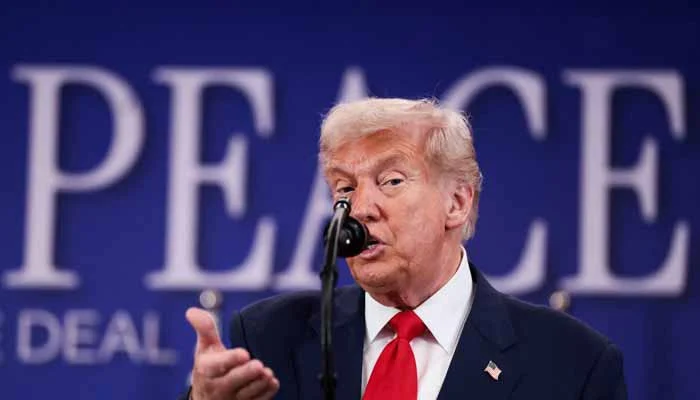
President Donald Trump has issued a warning to Iran, stating that the country has approximately 10 to 15 days to negotiate a significant agreement concerning its nuclear program or face severe consequences. During a speech in Washington, Trump hinted that the United States might take military action if negotiations fail, increasing the urgency of the ongoing stand-off.
The threat comes amid a substantial U.S. military buildup in the Middle East, which has heightened fears of escalating conflict if diplomatic efforts do not succeed. Trump mentioned that while talks with Iran are progressing, Tehran must reach a “meaningful” deal, or “bad things happen,” as he put it. He reminisced about U.S. airstrikes in June, claiming Iran’s nuclear capabilities had been “decimated,” and suggested further actions could be on the table over the next 10 days. When asked for specifics, Trump indicated that this timeframe was a maximum window and reiterated the potential for severe repercussions if Iran does not make concessions.
Despite the ongoing negotiations, tensions have driven up global oil prices, and recent military movements included a Russian warship joining Iranian naval exercises in the strategically vital Gulf of Oman. Negotiators from Iran and the U.S. have recently held talks, with Iran’s Foreign Minister Abbas Araqchi stating they agreed on some guiding principles. However, White House officials acknowledged that disagreements remain on certain issues.
Trump described the discussions as “good talks” and noted that Iran was preparing a formal proposal to address U.S. concerns. He urged Iran to cooperate with the U.S. on the path to peace, emphasizing that Iran should not develop nuclear weapons, as their presence would destabilize the Middle East. Iran continues to resist major concessions on its nuclear activities, asserting its program is peaceful, although the U.S. and Israel have long accused Tehran of secretly seeking a nuclear weapon.
Meanwhile, Trump’s rhetoric and military deployments—such as aircraft carriers, warships, and jets—have increased tensions in the region, with the possibility of another U.S. attack on Iran. Last June, the U.S. and Israel targeted Iranian nuclear and military sites. Upcoming discussions include a U.S.-Israeli meeting to further address Iran’s nuclear ambitions.
Western countries, including Poland, have responded to the rising tensions; Poland has advised its citizens to leave Iran swiftly, citing potential danger. Throughout January, Trump had also renewed threats of military strikes following violent crackdowns on protests in Iran, which resulted in significant casualties. The U.S. remains firm on demanding Iran give up uranium enrichment, long-range ballistic missiles, and its support for regional militant groups, while Iran remains firm that such issues are off the table, insisting its nuclear pursuits are solely for peaceful purposes. Satellite imagery continues to monitor Iranian military activity and repairs to nuclear and missile sites, illustrating ongoing preparations and tensions in the region.
 ChatGPT
 Perplexity
 Gemini AI
 Grok AI