Select Language:
President Donald Trump filed a defamation lawsuit against the BBC on Monday, contesting the depiction created by edited video clips that suggested he instructed supporters to attack the U.S. Capitol. This move marks a new chapter in his ongoing battle with media outlets he perceives as spreading false or biased information.
The lawsuit targets the BBC, accusing it of damaging his reputation by selectively editing a January 6, 2021 speech to include segments where he urged supporters to march on the Capitol and employ the phrase “fight like hell,” while omitting the part where he called for peaceful protest.
Trump seeks damages of $5 billion for each of the two counts in the case, alleging the BBC violated Florida laws that prohibit deceptive trade practices. The broadcaster has issued an apology, admitted to an error in judgment, and acknowledged that their edits could have misled viewers into believing he explicitly called for violence. However, the BBC defends their actions, stating there is no legal basis for a lawsuit.
In his Miami federal court filing, Trump argued that despite the apology, the BBC has shown no real remorse or implemented significant changes to prevent similar incidents in the future. Given that the BBC is funded by a mandatory license fee from UK TV viewers, any potential payout could be complicated by political considerations.
Trump’s legal team criticized the broadcaster for a “pattern of deception” aimed at undermining him, emphasizing the political motivations behind the controversy. The BBC has maintained that it currently has no further communication from Trump’s lawyers and upholds its stance that the report was accurate and that their editorial choices did not intentionally mislead.
The controversy over the incident, featured on the BBC’s “Panorama” program just before the 2024 presidential election, caused a major public relations crisis for the broadcaster, resulting in the resignation of its top executives. The documentary’s editing has come under scrutiny, especially after a leaked BBC memo questioned its handling, as part of a broader investigation into political bias at the organization.
Notably, the documentary was not broadcast in the United States. Legal experts suggest that Trump might have chosen to sue in U.S. courts because defamation claims in the UK have a one-year statute of limitations, which may have expired. To succeed under U.S. law, Trump must prove the BBC’s editing was false, defamatory, and resulted from reckless disregard or malicious intent.
Other media companies, such as CBS and ABC, have previously settled defamation lawsuits with Trump following his electoral victory in 2024. Trump has also pursued legal action against outlets like The New York Times and The Wall Street Journal, all of which have denied any wrongdoing.
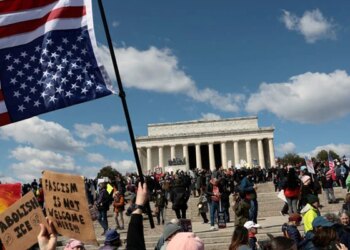
The January 6 riot was orchestrated to obstruct Congress’s certification of Joe Biden’s electoral victory over Trump in the 2020 election, a pivotal event that continues to influence political and media narratives.
 ChatGPT
 Perplexity
 Gemini AI
 Grok AI