Select Language:
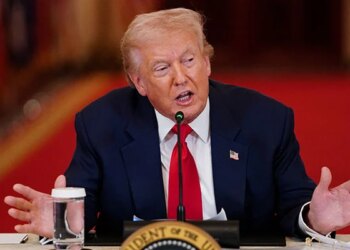
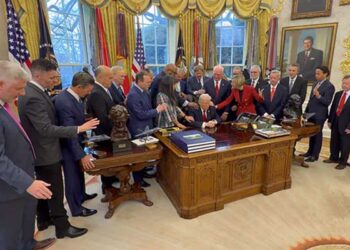
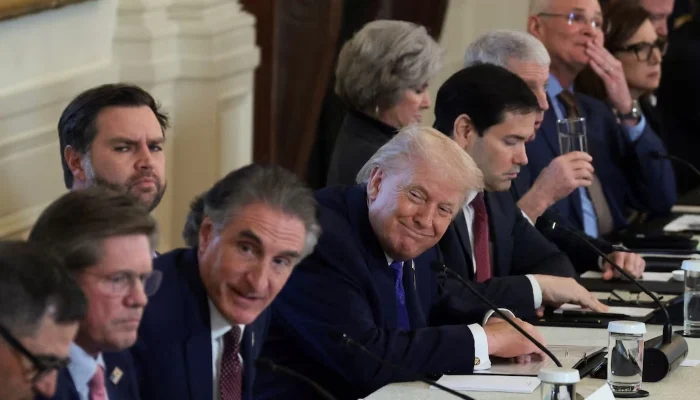
A group of high-ranking U.S. officials, including President Donald Trump, Vice President JD Vance, Secretary of State Marco Rubio, and Secretary of the Interior Doug Burgum, gathered at the White House in Washington, D.C., on January 9, 2026, to meet with leaders from major oil corporations. The purpose was to discuss investment opportunities in Venezuela, with Trump expressing a desire for these companies to commit around $100 billion to significantly boost the country’s oil output.
Trump emphasized that U.S. companies could play a crucial role in rebuilding Venezuela’s deteriorating energy infrastructure and increasing oil production to unprecedented levels. He highlighted the opportunity for American firms to be involved in this major revitalization effort, alongside top executives from Exxon Mobil, ConocoPhillips, Chevron, and others.
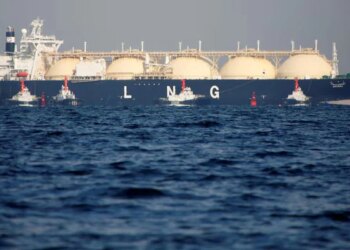
The president also mentioned an agreement with Venezuela’s interim government to supply the U.S. with 50 million barrels of crude oil—a delivery he expects to continue indefinitely—aiming to benefit American consumers through lower energy prices. Meanwhile, U.S. authorities have continued maritime efforts to enforce an embargo, with the fifth Venezuelan oil tanker seizure announced on the same day.
Officials believe that maintaining control over Venezuela’s oil revenue is critical to ensuring the country’s compliance with U.S. interests, including fighting corruption and drug trafficking. Some Democratic lawmakers have voiced concerns that this strategy resembles extortion, and industry analysts warn that political instability in Venezuela adds risk to any investment plans.
Despite these hurdles, companies like Chevron, Vitol, and Trafigura are seeking U.S. licenses to market Venezuela’s existing crude. Still, major oil companies remain cautious about committing to large, long-term investments due to high costs and ongoing political unrest.
Exxon’s CEO Darren Woods stated during the meeting that Venezuela is currently “uninvestable” without significant political and structural reforms, noting previous asset seizures that would prevent easy re-entry. Conversely, Chevron’s Vice President Mark Nelson reaffirmed Chevron’s ongoing commitment to the country, as the only major U.S. firm still active there.
Smaller independents and private equity-backed firms, some linked to Colorado, the home state of Energy Secretary Chris Wright, also expressed interest in investing and marketing Venezuelan oil, praising Trump’s policies. Venezuela, despite having the largest oil reserves globally, produces only about 1% of worldwide supply today—far below its peak of over 3.5 million barrels daily in the 1970s.
Trump assured the companies that the U.S. would guarantee their physical and financial safety in Venezuela, though details remain undisclosed. Ahead of the meeting, Secretary Wright mentioned the possibility of U.S. support through the Export-Import Bank to fund large-scale oil projects, reducing financial risks for investors.
The administration’s focus is on securing commitments from industry players, with Trump stressing the importance of quick investment and repayment, ultimately aiming to balance benefits among Venezuela, the United States, and the companies involved.
 ChatGPT
 Perplexity
 Gemini AI
 Grok AI