Select Language:
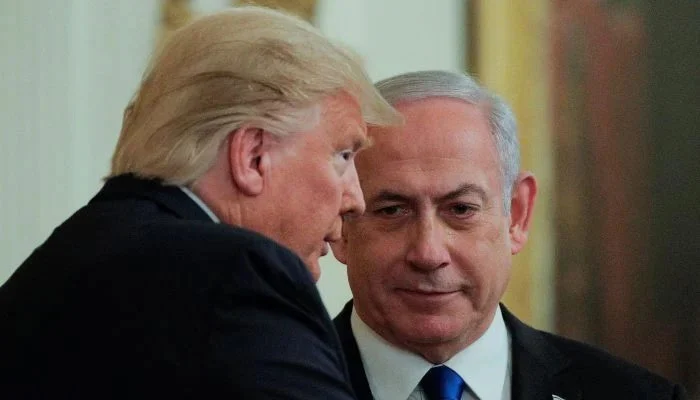
President Donald Trump met with Israeli Prime Minister Benjamin Netanyahu at the White House on Wednesday, marking their seventh encounter in just over a year. Netanyahu aimed to influence upcoming U.S. talks with Iran, pushing for negotiations to extend beyond nuclear issues to include restrictions on Iran’s missile capabilities and other security concerns. Trump issued warnings of potential military strikes if an agreement isn’t reached, emphasizing the importance of halting Iran’s nuclear ambitions and missile development.
During the meeting, Trump reiterated his stance against Iran acquiring nuclear weapons or missile programs, suggesting that a comprehensive deal should eliminate both. He also mentioned contemplating sending a second aircraft carrier strike group to the region as part of a broader U.S. military presence.
Israeli officials are concerned that the U.S. might accept a limited nuclear deal that overlooks Iran’s ballistic missile program and support for regional proxy groups like Hamas and Hezbollah. They advise caution regarding Iran’s promises, fearing they might not be trustworthy. Netanyahu indicated he plans to share U.S. negotiation principles with the president and hinted at possible military options if diplomacy fails.
Iran has expressed willingness to discuss limits on its nuclear program if sanctions are lifted but insists that missile capabilities are non-negotiable. The country’s senior advisers have made it clear that Iran refuses to link its missile program to nuclear negotiations.
Netanyahu arrived at the White House with less fanfare than usual, entering discreetly and meeting privately with Trump. The agenda also included discussions about Gaza, with Trump aiming to advance a ceasefire initiative he helped broker. Progress on rebuilding Gaza remains delayed, particularly over disarmament of Hamas and Israeli troop withdrawals.
The visit was scheduled earlier but was moved forward due to recent U.S. engagement with Iran. Last week’s Oman talks showed some positivity, but negotiations concerning Iran’s missile program, proxies, and regional influence continue. Trump has not explicitly committed to broadening negotiations but indicates that addressing Iran’s missile threat could be part of future discussions.
Despite the regional tensions, Israel remains cautious. Its recent military operations have weakened Iran’s influence, though concerns remain about Tehran’s ability to recover and rebuild its military assets. U.S.-Israel relations are generally aligned, but recent developments, including Israeli plans to ease land purchases in the West Bank, have sparked international criticism. Trump reiterated his opposition to annexation, emphasizing the need to focus on current challenges.
 ChatGPT
 Perplexity
 Gemini AI
 Grok AI