Select Language:
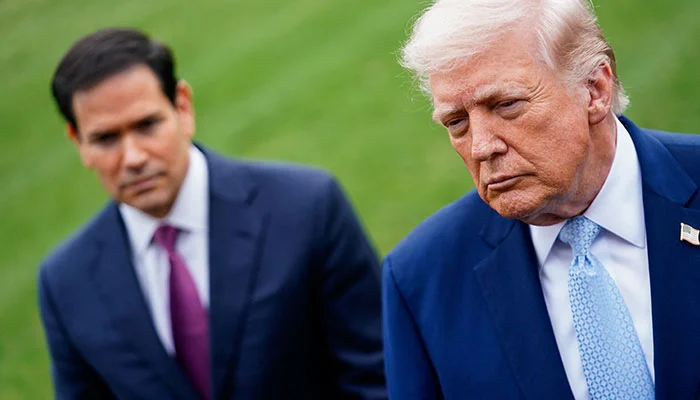
On March 20, 2026, U.S. President Donald Trump addressed the media as he left the White House for Florida, flanked by Secretary of State Marco Rubio. The early U.S. stance included urging Iranians to overthrow their government, with aims ranging from weakening Iran’s military power to eliminating missile threats. Estimates for how long the conflict might last varied widely—from under four weeks to an indefinite period.
Critics note that the shifting objectives and reasons provided by Trump and his top officials suggest a lack of comprehensive planning for both the conflict and its aftermath. The stated goals encompassed toppling Iran’s government, decreasing its military, security, and nuclear capabilities, diminishing its regional influence, and supporting Israeli interests.
On February 28, Trump called on Iranians to take control of their government during a social media video released concurrent with attacks from the U.S. and Israel, claiming this might be their only opportunity for generations. He labeled the operations as “major combat operations” and vowed to prevent Iran from acquiring nuclear weapons, despite Iran’s assertions that its nuclear program is peaceful. Trump emphasized destroying Iran’s missile industry and navy, asserting that Iran’s long-range missiles pose a threat to Europe, U.S. troops abroad, and potentially the American homeland—claims which were widely disputed by experts and U.S. intelligence, who state Iran’s missile capabilities are years from threatening the U.S.
By March 2, Trump indicated the war might last four to five weeks but could extend further. Despite this, he noted that U.S. forces were already ahead of schedule and expressed willingness to prolong the conflict as needed, with some statements claiming an “unlimited supply” of munitions and the possibility of fighting “forever.” Statements to Congress did not specify a set timeline.
Secretary of State Marco Rubio claimed that the attack on Iran was prompted by Israel’s decision to strike, aiming to prevent higher casualties by preemptively acting before Iran could launch attacks. Contradicting Rubio, Trump later stated he ordered U.S. forces to join Israel because he believed Iran was about to strike first himself.
Further objectives included destroying Iranian missile production, their navy, and other key security infrastructure, with the U.S. insisting there would be no negotiations until Iran’s unconditional surrender. From March 8 to 11, officials suggested the initial strikes marked only the beginning, with Trump sometimes indicating the war was “pretty much complete,” yet also emphasizing the need to “finish the job.” By March 13, Trump softened his call for Iranians to overthrow their government, stating the war would end whenever he personally felt it was time.
On March 19, Pentagon officials noted no fixed end date, leaving the decision to Trump, who later hinted that the U.S. was close to achieving its objectives but was not yet calling for a ceasefire. On March 20, Trump suggested that efforts were nearing completion, but he also indicated he did not want to declare a ceasefire, emphasizing ongoing military operations.
 ChatGPT
 Perplexity
 Gemini AI
 Grok AI