Select Language:
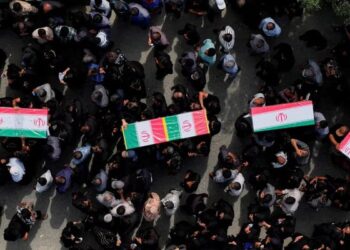
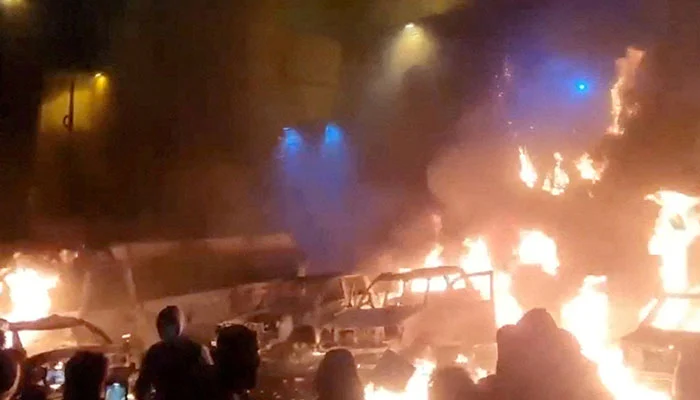
Protesters gather as vehicles burn amid escalating anti-government unrest in Tehran, Iran, captured in a social media video released on January 9, 2026. — Reuters
– Trump warns Iran against shooting at protesters.
– He warns the U.S. will respond if Iran opens fire.
– Human rights groups report at least 62 deaths over two weeks of protests.
DUBAI: U.S. President Donald Trump issued a fresh warning to Iran’s leadership on Friday as video footage showed widespread anti-government demonstrations across the country, with authorities resorting to internet blackouts to suppress the unrest.
Human rights organizations have recorded dozens of protester fatalities during nearly two weeks of demonstrations. Meanwhile, Iranian state television broadcast images of clashes and fires, with semi-official Tasnim News Agency reporting the overnight deaths of several police officers.
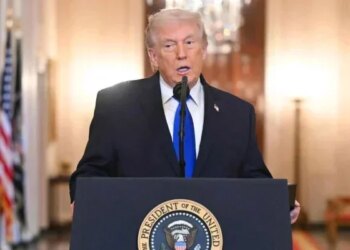
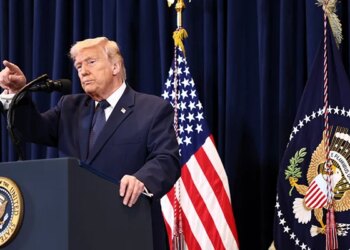
Trump, who authorized strikes on Iran last summer and recently warned Tehran that the U.S. might support the protesters, issued another warning, stating, “You better not open fire because we will respond in kind.” He added, “I just hope the protesters in Iran stay safe, because it’s a very dangerous situation right now.”
Despite this, Trump indicated he was hesitant to meet with Reza Pahlavi, the US-based crown prince and son of the late Shah of Iran, suggesting he prefers to observe how the crisis develops before endorsing any opposition leader.
Iran’s Supreme Leader Ayatollah Ali Khamenei delivered a televised speech, refusing to back down. He accused demonstrators of acting on behalf of foreign opposition groups and U.S. interests, while a public prosecutor threatened those involved with the death penalty.
The Iranian Ministry of Information and Communications Technology explained the internet shutdown as a safety measure enacted “by the competent security authorities under the country’s current conditions.”
Pakistan has set up a dedicated support desk at its embassy in Tehran to assist Pakistani nationals amid ongoing protests. Muhammad Mudassir Tipu, Pakistan’s ambassador to Iran, stated the help desk will operate 24/7, providing guidance and support through dedicated phone lines:
– Mr. Farhan Ali: 00989107648298
– Mr. Faizan: 00989906824496
– Mr. Kashif Ali: 00989938983309
– Landlines: 00982166941388, 00982166944888
The protests, Iran’s most significant internal challenge in over three years, are linked to a severe economic crisis and regional conflicts, including last year’s war with Israel and the U.S. While initial demonstrations centered on economic grievances—such as the Iranian rial losing half its value against the dollar and inflation soaring past 40%—the protests have since evolved to include direct accusations against the government.
According to HRANA, an Iranian rights group, at least 62 people have been killed during these protests, including 14 security officers and 48 civilians, since their start on December 28. Western leaders from France, Britain, and Germany issued a joint condemnation, calling for Iran to cease violence and respect demonstrators’ rights. The UN expressed deep concern over the loss of life, emphasizing the global right to peaceful protest and governments’ responsibilities to protect that right.
The blackout on the internet has significantly limited information flow from Iran, complicating reporting and communication. Many flights between Dubai and Iran have been canceled, according to Dubai Airport.
State television footage depicted burning buses, cars, motorbikes, and fires at underground rail stations and banks. Rights group Hengaw reported that a protest march after Friday prayers in Zahedan, home to the Baluch minority, was met with gunfire, wounding several participants.
Iran’s authorities maintain a dual stance: recognizing the legitimacy of economic protests while condemning what they call violent rioters and deploying security forces accordingly. Last week, President Masoud Pezeshkian urged a “kind and responsible approach,” while the government introduced modest financial aid to mitigate worsening poverty amid soaring inflation.
Nevertheless, as unrest intensifies and violence increases, Khamenei adopted a more aggressive tone, asserting, “The Islamic Republic came to power through the blood of hundreds of thousands of honorable people. It will not yield to vandals,” and accusing those involved in the protests of trying to please Trump.
Iran’s UN ambassador accused the U.S. of destabilization and transforming peaceful protests into violent acts. The country’s chief prosecutor warned that anyone engaging in sabotage or clashes would face the death penalty.
External opposition factions, fragmented and diverse, have called for continued protests, with Pahlavi encouraging Iranians on social media: “The world is watching. Take to the streets.”
Experts note that the Iranian society’s sense of hopelessness and anger has never been higher, driven by economic hardship and political repression. However, internal support for the monarchy and groups like the MEK remains uncertain.
Foreign Minister Abbas Araqchi downplayed the likelihood of military intervention, stating it is “very low,” and announced that Oman’s foreign minister would visit Tehran soon, signaling ongoing diplomatic efforts.
Iran has historically endured multiple waves of protests—from student demonstrations in 1999 and disputed elections in 2009 to economic protests in 2019 and the 2022 “Women, Life, Freedom” movement, which saw diverse segments of the population take to the streets over the killing of a young woman in police custody.
 ChatGPT
 Perplexity
 Gemini AI
 Grok AI