Select Language:
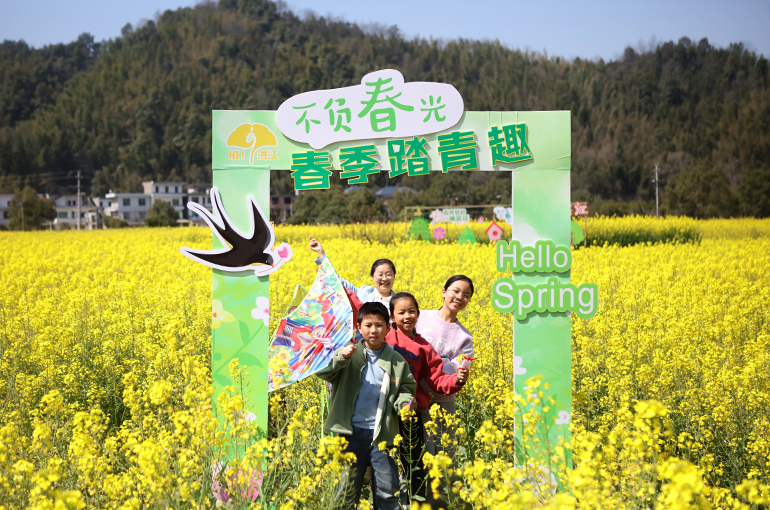
Chinese travelers have been hitting the road in increasing numbers since the government introduced a mandated spring break this year, aiming to boost tourism and stimulate spending. The recent Government Work Report proposed spring and fall breaks for primary and secondary schools and introduced paid staggered leave for workers. As a result, more than 50 cities launched their spring break on April 1, creating a continuous six-day holiday combined with the upcoming Qingming Festival.
Eight provinces, including Shandong, Hunan, Zhejiang, and Sichuan, are implementing spring and fall breaks for students. Many families even began their vacation plans on March 31, according to data from a travel platform. Hotel occupancy rates in popular cities surged nearly threefold compared to the same period last year, as families checked into accommodations at various destinations. There was also a significant increase in air travel from the regions that adopted the new spring break schedule.
Several areas have rolled out spring holiday travel packages, offering discounts such as reduced admission fees, transportation subsidies, and shopping vouchers. These incentives have encouraged more family trips, especially among those with children attending primary and secondary school.
Industry experts note that travel patterns and spending behaviors during the spring tourism season have shifted considerably. The new spring break policy has not only boosted holiday-related consumption but has also energized the broader spring tourism market. With travelers expanding their destinations, the potential for long-distance travel spending has grown substantially.
On April 1, the most searched tourist spots nationwide included Universal Beijing Resort, Shanghai Disney Resort, the Longmen Grottoes in Luoyang, Taihu Lake’s Yuntouzhu Scenic Area in Wuxi, Slender West Lake in Yangzhou, Hongshan Forest Zoo in Nanjing, the Humble Administrator’s Garden in Suzhou, Emperor Qinshihuang’s Mausoleum in Xi’an, Wuyuan Huangling Scenic Area in Shangrao, and Mount Tai Scenic Area in Tai’an.
 ChatGPT
 Perplexity
 Gemini AI
 Grok AI