Select Language:
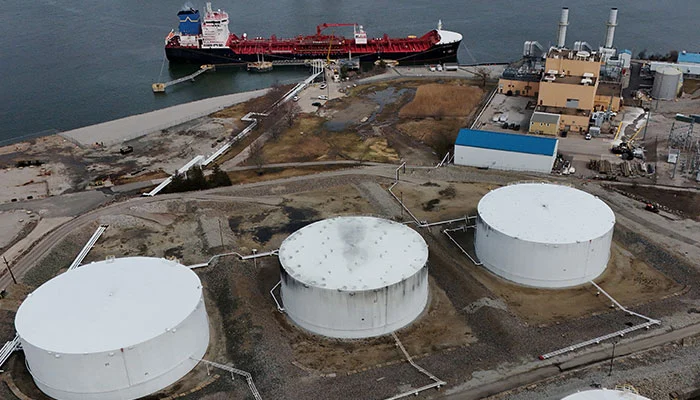
A drone shot captures the Portuguese-flagged oil and chemical tanker CB Pacific docked at Moran Shipping Agencies’ Citgo Petroleum Quincy/Braintree Terminal. This facility manages home heating oil, gasoline, and diesel. The ship had just arrived from Quebec, Canada, to Braintree, Massachusetts, on March 18, 2026, according to Reuters.
– Qatar condemns both Israel and Iran, expelling Iranian diplomats.
– South Pars is a shared natural gas field—the largest in the world—situated between Iran and Qatar.
– Over 3,000 deaths in Iran, with hundreds more killed across the Gulf region to date.
Iran blamed Israel for striking its facilities at South Pars on Wednesday, marking a significant escalation in the ongoing US-Israeli conflict that caused oil prices to jump sharply. Iran responded by pledging to attack oil and gas installations throughout the Gulf, launching missiles at Qatar and Saudi Arabia.
Qatar’s national oil company, QatarEnergy, reported extensive damage after Iranian missiles struck Ras Laffan Industrial City, a key energy hub. Saudi Arabia intercepted and destroyed four ballistic missiles aimed at Riyadh on Wednesday, along with an attempted drone attack targeting an eastern gas facility.
South Pars is Iran’s sector of the world’s largest natural gas deposit, shared with Qatar, a close US ally, across the Gulf. Qatar’s foreign ministry condemned Israel’s “dangerous and irresponsible” attack on Iran’s facilities and accused Iran of a blatant breach of international law, expelling two senior Iranian diplomats.
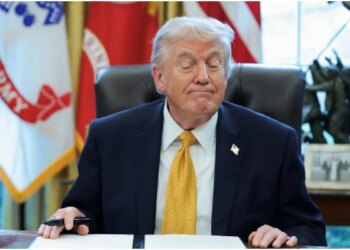
This escalation is part of the broader upheaval affecting global energy supplies, raising political tensions for President Donald Trump, who has supported Israel’s recent strikes against Iran. US diesel prices have surged past $5 a gallon, the highest since the inflation spike of 2022 that hurt support for Biden.
The conflict has rapidly spread to neighboring countries, halting shipping from the region—one of the world’s most critical energy producers—and threatening long-term damage to infrastructure. Brent crude oil prices jumped roughly 5%, topping $108, while stock markets declined.
In Washington, intelligence boss Tulsi Gabbard briefed Congress, stating Iran’s government has been weakened since the war’s February 28 start but remains capable of launching attacks on US military bases and other regional interests.
US producer prices had the largest February jump in seven months, driven by rising costs for services and goods, likely to accelerate as oil prices remain high.
Though Israel hasn’t officially claimed responsibility for the South Pars attack, reports from the Wall Street Journal, citing unnamed US officials, suggest President Trump was aware and supported Israel’s plans.
Iran’s Fars news agency reported damage to gas tanks and parts of a refinery, with workers evacuated, and the fire brought under control. Iran identified multiple regional energy facilities—such as Saudi Arabia’s Samref Refinery and Jubail Complex, the UAE’s Al Hosn Gas Field, and Qatar’s Mesaieed Petrochemical Complex—as “direct and legitimate targets” to be evacuated promptly before Iranian missiles arrive. Historically, the US and Israel have avoided targeting energy infrastructure, respecting international law against attacking civilian energy assets.
European leaders, including President Emmanuel Macron, have called for a pause on strikes targeting civilian infrastructure, especially water and energy facilities. Despite Iran’s shutdown of the Strait of Hormuz—through which 20% of global oil and LNG passes—consuming countries expect the disruption to be temporary if critical infrastructure remains unscathed.
European Union foreign policy chief Kaja Kallas emphasized the importance of safe passage through the Strait, advocating for diplomatic solutions.
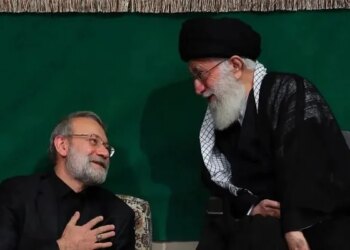
Regional violence extends further: Israel struck central Beirut, leveling apartment buildings amid tense airstrikes unseen in decades. Israel also killed Iran’s intelligence minister, Esmail Khatib, following the earlier assassination of security chief Ali Larijani. Defense Minister Israel Katz declared that no Iranian official is safe, emphasizing that “everyone is in the crosshairs.”
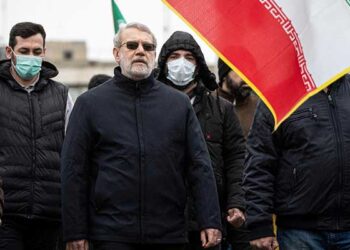
Prime Minister Benjamin Netanyahu authorized the military to target Iranian officials whenever opportunities arise, without needing further approval. Thousands gathered in Tehran for Larijani’s funeral, mourning the slain figures. Iran retaliated with cluster missile attacks on Israel—more difficult to intercept—which resulted in at least 15 Israeli casualties, including a foreign national killed in Adanim after an Iranian missile strike. Additionally, three Palestinian women were killed in the West Bank in what the Palestinian Red Crescent identified as Iran’s missile attack.
In Beirut’s Bachoura district, Israel warned residents early Wednesday to evacuate a building used by Hezbollah, which was subsequently destroyed during intense airstrikes. Local resident Abu Khalil told Reuters he helped residents flee, criticizing the strikes as actions meant to terrorize.
Since the conflict’s escalation, over 3,000 people have reportedly died in Iran, according to the Iran Human Rights Group HRANA. Lebanon reports nearly 900 deaths, with 800,000 displaced from their homes. Attacks across Iraq and the Gulf States have also taken lives, including at least 13 US service members.
 ChatGPT
 Perplexity
 Gemini AI
 Grok AI