Select Language:
Iran is planning to implement periodic water restrictions for Tehran’s 10 million residents as it confronts its most severe drought in decades. Rainfall in the capital has hit levels not seen in a hundred years, with officials reporting that half of Iran’s provinces have not received any rain for months. To conserve water, authorities are preparing to reduce water flow in Tehran, with some local reports indicating pipes have already gone dry overnight in certain areas.
“I believe these measures will prevent waste, even if they cause some inconvenience,” Iran’s Energy Minister Abbas Ali Abadi announced on state television. Meanwhile, President Masoud Pezeshkian, in a televised speech on Friday, warned that Tehran might need to be evacuated if rainfall does not resume before year’s end—though he did not specify how such a large-scale relocation might be carried out.
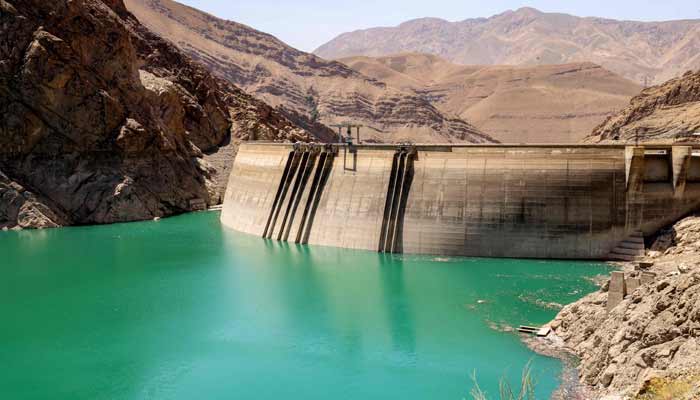
Situated on the southern slopes of the Alborz mountains, Tehran usually relieves its hot, arid summers with autumn rains and winter snowfall. However, the city’s water situation is dire. According to local sources, Tehran consumes about three million cubic meters of water daily. The Amir Kabir Dam on the Karaj River—one of the city’s five reservoirs—is nearly empty, containing just 14 million cubic meters, a stark drop from last year’s 86 million. This reserves enough to cover less than two weeks of the city’s needs.
Images broadcast by state TV show several other dams, including those serving the cities of Isfahan and Tabriz in the northwest, with significantly lower water levels than in previous years. Hassan Hosseini, deputy for Mashhad, Iran’s second-largest city, indicated that nighttime water cuts are being considered to help manage shortages. Over the summer, Tehran declared two public holidays to save water and energy, coinciding with frequent power outages during a severe heatwave.
 ChatGPT
 Perplexity
 Gemini AI
 Grok AI