Select Language:
Syria’s interior ministry stated Sunday that the gunman responsible for killing three Americans in the central Palmyra area the previous day was a member of the security forces who was scheduled to be dismissed for extremism. On Saturday, two U.S. troops and a civilian interpreter lost their lives in what the Syrian government called a “terrorist attack,” which Washington attributed to a Daesh militant who was subsequently killed.
According to the interior ministry’s spokesperson, Noureddine al-Baba, the individual was to be fired before the assault due to extremist beliefs, with the termination planned for Sunday. A Syrian security official told AFP that “11 members of the general security forces were detained and questioned following the attack.” The anonymous official mentioned the shooter had been part of the security forces for over 10 months, serving in several cities before being transferred to Palmyra.
Palmyra, famous for its UNESCO World Heritage-listed ruins, was under Daesh control during the height of its territorial expansion in Syria. This incident marks the first of its kind reported since Bashar al-Assad’s long-standing rule was ousted last December.
President Donald Trump pledged to respond with “very serious retaliation” following Saturday’s assault. An unnamed Syrian defense ministry official told AFP that U.S. forces arrived from the southeast, traveling by land from the Al-Tanf military base near Jordan’s border. The joint Syrian-American patrol reportedly toured Palmyra, then moved to T-4 airbase before returning to a base in Palmyra itself.
Another Syrian military source, requesting anonymity, indicated that gunfire erupted during a meeting between Syrian and American officers at a Syrian base in Palmyra. However, a Pentagon official, also speaking anonymously, noted that the attack occurred in an area outside the control of President Bashar al-Assad.
Pentagon spokesperson Sean Parnell explained that U.S. soldiers were engaging in leadership support for counterterrorism operations when the attack happened. U.S. envoy to Syria, Tom Barrack, added that the ambush targeted a joint U.S.-Syrian patrol. Trump characterized the incident as a Daesh attack “against the U.S. and Syria, in a very dangerous part of Syria that is not fully controlled by them.” He also noted that the three injured U.S. troops are recovering well.
Syrian Foreign Minister Asaad al-Shaibani condemned the attack, calling it “terrorist.” Anwar al-Baba, a spokesman for the Syrian Interior Ministry, mentioned on state TV that there had been prior warnings from internal security officials to allied forces operating in the desert region. Despite these alerts, the international coalition did not heed the warnings regarding potential Daesh infiltration.
Daesh captured large swaths of territory in Syria and Iraq in 2014 amid the civil war but was largely defeated territorially after five years. Still, its fighters maintain a presence, especially across Syria’s extensive desert landscape. Recently, during Syrian President Ahmed al-Sharaa’s historic visit to Washington, Damascus officially joined the US-led coalition against Daesh.
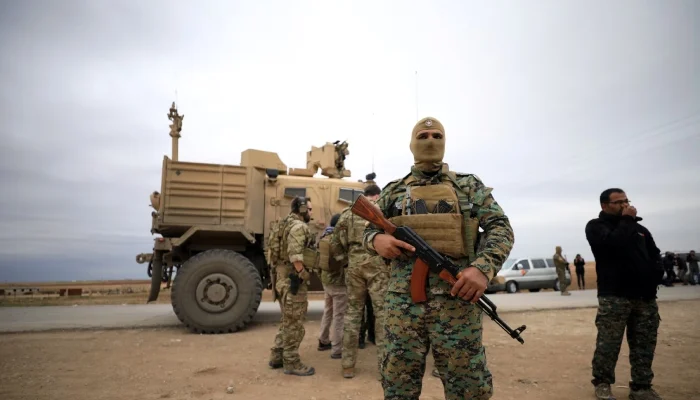
U.S. forces are positioned in Syria’s Kurdish-controlled northeast and near Al-Tanf close to the Jordanian border.
 ChatGPT
 Perplexity
 Gemini AI
 Grok AI