Select Language:
The Strait of Hormuz is a critical maritime corridor for oil transportation, often leveraged by Iran as a geopolitical tool. Tehran has repeatedly threatened to shut it down during crises, though such threats have so far remained empty. In late January, a senior naval commander from Iran’s Revolutionary Guard reiterated the warning, signaling potential closure if attacked, amid U.S. President Donald Trump’s earlier threats of military intervention if Iran didn’t agree to curb its nuclear activities.
While Iran has occasionally hinted at blockades, it has yet to take definitive action, although it did briefly close part of the strait during recent military exercises citing safety concerns. Here’s what you need to know about this vital waterway.
Gateway to the Persian Gulf
The Strait of Hormuz connects the Persian Gulf to the Indian Ocean, situated between Iran and Oman’s Musandam Peninsula. Its narrow width—about 31 miles (50 kilometers)—and shallow depth—no more than 200 feet (60 meters)—make it susceptible to military blockage. The area includes several strategically significant islands, such as Iran’s Hormuz, Qeshm, and Larak. Disputed territories like Greater Tunb, Lesser Tunb, and Abu Mussa, controlled by Iran since 1971, lie in proximity and provide vantage points overlooking the Gulf.
Major Oil Transit Route
This strait is among the world’s most crucial energy chokepoints, serving as a corridor for oil produced in the Gulf to reach markets across Asia, Europe, North America, and beyond. According to the U.S. Energy Information Administration, approximately 20% of global oil consumption—around 20 million barrels daily in 2024—flows through this passage. Nearly as much liquefied natural gas (LNG), primarily from Qatar, also transits these waters. Although Saudi Arabia and the UAE have infrastructure to reroute oil shipments, their capacity—about 2.6 million barrels daily—is limited. The EIA emphasizes that large volumes of oil depend on this route, with few alternatives if it gets blocked. Over 80% of the oil and gas passing through the strait is destined for Asian markets, with China importing over 90% of Iran’s oil exports, according to industry sources.
Military Dynamics
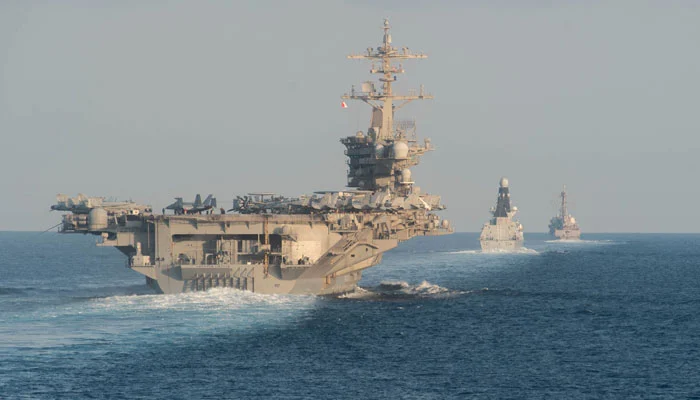
Iran’s Revolutionary Guard oversees naval operations in the region, frequently criticizing the presence of foreign military forces—including the U.S. Fifth Fleet based in Bahrain and the U.S.’s largest Middle Eastern base in Qatar. Tensions have escalated, especially after 2018, when the U.S. disavowed the Iran nuclear deal and reimposed sanctions, leading to increased confrontations. Historical incidents include attacks on ships during the Iran-Iraq War, mines laid in the strait in the late ‘80s, and the tragic shootdown of Iran Air Flight 655 by USS Vincennes in 1988, which resulted in 290 deaths.
Recurring Maritime Incidents
The strait frequently witnesses ship seizures, attacks, and confrontations. Post-2018, these events intensified, with attacks on vessels and the downing of unmanned drones raising fears of broader escalation. Highlights include the 2021 attack on an Israeli-affiliated tanker in the Gulf of Oman that resulted in two deaths, with accusations directed at Iran. In 2024, Iran’s Revolutionary Guards seized a Portuguese-flagged cargo ship, alleging ties to Israel. Early February saw a U.S.-flagged tanker challenged by Iranian gunboats but allowed to proceed. Tensions continue to shape this strategic passage, underscoring its importance and volatility.
 ChatGPT
 Perplexity
 Gemini AI
 Grok AI