Select Language:
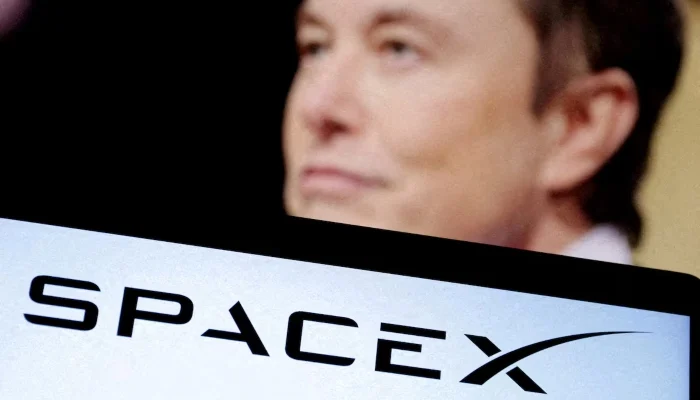
Elon Musk announced on Sunday that SpaceX has shifted its focus toward constructing a “self-growing city” on the Moon, with an estimated timeline of less than ten years to achieve this goal.
While SpaceX remains committed to Musk’s longstanding vision of establishing a city on Mars within five to seven years, he emphasized on his X platform that the primary priority now is ensuring civilization’s future, noting that building on the Moon can be accomplished more quickly.
Musk’s remarks align with a Wall Street Journal report from Friday, which revealed that SpaceX has informed investors it plans to prioritize lunar missions and will delay attempts at Mars—aiming for an uncrewed lunar landing by March 2027. Just last year, Musk had targeted an uncrewed mission to Mars by the end of 2026.
The United States faces stiff competition from China in the effort to send astronauts back to the moon within this decade. The last manned lunar landing occurred during the Apollo 17 mission in 1972.
Recently, Musk also disclosed that SpaceX acquired xAI, an artificial intelligence company he also leads, in a deal that values SpaceX at around $1 trillion and xAI at $250 billion. Industry observers see this move as a way for SpaceX to bolster its plans for space-based data centers, which Musk believes are more energy-efficient than on-earth facilities, especially as the demand for computing power surges with advancements in AI.
SpaceX aims to launch a public offering later this year that could raise up to $50 billion, potentially making it the largest IPO in history.
Earlier on Sunday, Musk shared SpaceX’s first Super Bowl commercial, promoting its Starlink internet service.
In addition to redirecting SpaceX’s focus, Musk is also steering Tesla, his publicly traded company, toward new horizons. After dominating the global electric vehicle market, Tesla plans to invest $20 billion this year to pivot towards autonomous driving technology and robotics. To accelerate this transition, Musk revealed last month that Tesla will cease production of two vehicle models at its California plant to dedicate space for manufacturing its humanoid robot, Optimus.
 ChatGPT
 Perplexity
 Gemini AI
 Grok AI