Select Language:
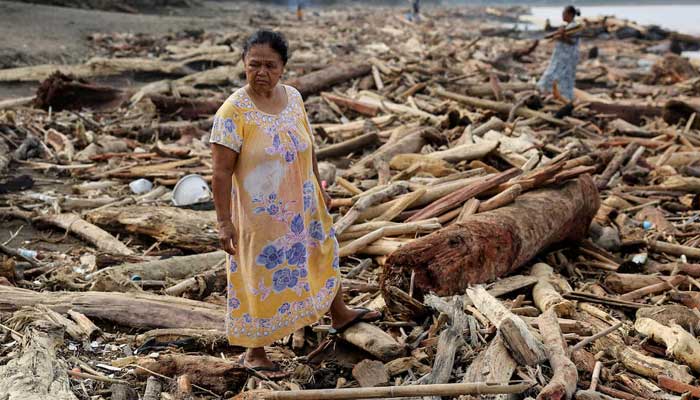
A woman stands among tree trunks stranded on the shore after deadly flash floods and landslides in Padang, West Sumatra, Indonesia, on November 30, 2025. — Reuters
Indonesia, Malaysia, and Thailand are experiencing widespread destruction. At least 176 people have died in Thailand and three in Malaysia. Indonesia’s death count has risen to 502, with 508 individuals still missing.
Rescue teams in western Indonesia are working tirelessly to reopen roads blocked by cyclone-triggered landslides and floods. As clearer weather emerges, the full extent of the disaster becomes apparent, with nearly 700 lives lost across Southeast Asia.
The catastrophic event originated from a rare tropical storm in the Malacca Strait, bringing relentless rains and strong winds for a week, complicating rescue efforts in stranded communities hit by mudslides and severe flooding.
In Thailand, the death toll has increased slightly to 176 due to flooding in eight southern provinces, impacting approximately three million residents. The military has been mobilized to evacuate critical patients and assist those trapped for days by rising floodwaters.
In the province of Songkhla, where 138 deaths have occurred, officials report that about 85% of water services have been restored, with full service expected by Wednesday. The hardest-hit city, Hat Yai, received a record 13 inches of rain on November 21—the highest in 300 years—followed by days of persistent downpours.
Prime Minister Anutin Charnvirakul has announced a seven-day timeline for residents to return home, as part of the ongoing recovery efforts.
Meanwhile, Malaysia has evacuated 11,600 people to shelters, remaining on alert for potential second and third waves of flooding.
In Palembayan, West Sumatra, locals are clearing mud, trees, and debris from roads under bright sunshine, while some residents attempt to salvage belongings such as documents and motorcycles from their damaged homes. Men in camouflage gear sift through twisted metal and broken poles, as trucks circulate, looking for missing relatives and distributing water to those in knee-deep mud.
Government officials are prioritizing infrastructure repairs—restoring roads, bridges, and communication networks. Indonesia has reported over 28,000 homes affected and 1.4 million people impacted by the disaster.
Indonesian President Prabowo Subianto visited the affected regions Monday, commending the resilience and solidarity of the local communities amid what he called a catastrophe. “Some roads remain inaccessible, but we are doing everything possible to overcome these difficulties,” he said in North Sumatra. “Our nation is strong enough to get through this.”
This widespread destruction follows months of severe weather across Southeast Asia, including typhoons impacting the Philippines and Vietnam, leading to frequent and prolonged flooding. Scientists warn that climate change is likely to increase the frequency of such extreme weather events.
 ChatGPT
 Perplexity
 Gemini AI
 Grok AI