
Select Language:
North Korea’s main newspaper has traditionally been a source of fiery missile test coverage, propaganda praising the country’s leaders, and bitter rhetoric against the United States. It was once so controversial that South Korea prohibited its citizens from reading it.
Recently, however, a shift in approach is underway. South Korean President Lee Jae Myung, known for his more conciliatory stance, joked that reading Rodong Sinmun—meaning “Workers’ Newspaper”—won’t turn the public into communists. As a result, from this week, South Koreans are now permitted to access the publication at certain public locations without needing government approval.
Individuals no longer have to register or explain their purpose for viewing the paper; they only need to visit select libraries to read it. Opinions in Seoul about this policy change are mixed. Critics like 22-year-old university student Park Si-won liken it to allowing access to terrorist propaganda, implying it could encourage radicalization. Conversely, elder Seoul resident Hong Se-wung finds the decision unsettling, viewing it as dangerous to promote reading material from a hostile neighboring country.
Many others believe that most South Koreans won’t bother going out of their way to read Rodong Sinmun, with 27-year-old graduate student Son Yu-jin noting that fewer people read physical newspapers nowadays.
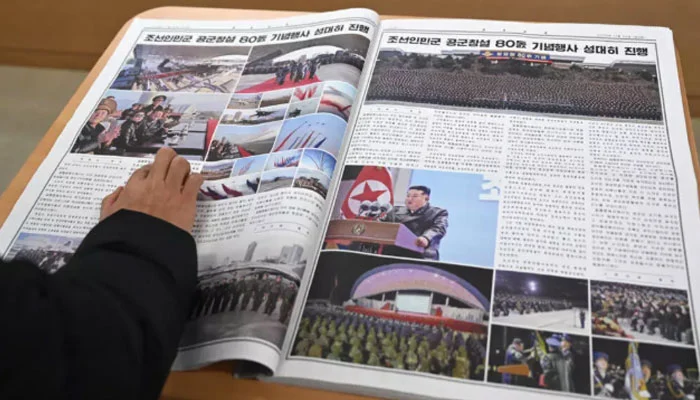
This move is largely symbolic, given the ongoing strict controls. North Korean websites remain inaccessible from South Korean IPs, and the two nations are still technically at war. But on Friday, AFP journalists observed a few visitors flipping through copies of the North Korean paper at the national library, noting its images of Supreme Leader Kim Jong Un, whose name is always prominently displayed. Nevertheless, during their visit, staff at other libraries indicated the new access policies haven’t been widely implemented yet.
Expert Chad O’Carroll suggests that this change is more about signaling a willingness to open doors rather than a significant policy overhaul. Facilitating access to North Korean state media could benefit researchers, but doing so would require politically sensitive adjustments to South Korea’s security laws.
Seoul is promising to gradually expand information sharing about North Korea to foster better relations, although the North continues to block South Korean content and punishes those who attempt to access it.
South Korean officials view the easing of Cold War-era censorship as an opportunity for citizens to gain a clearer understanding of North Korea’s realities. Bae Jee-woo, a businesswoman, expressed confidence that South Koreans will interpret North Korean propaganda through their own perspectives and that such material isn’t likely to have a significant influence on them.
 ChatGPT
 Perplexity
 Gemini AI
 Grok AI