Select Language:
- President Trump undecided on which approach to pursue, according to sources.
- Tehran is preparing for possible military clash, claims an Iranian official.
- Israeli and Arab officials doubt that airstrikes alone can eliminate Iran’s government.
A few sources close to the discussions reveal that President Trump is considering options that include precise strikes against security personnel and leadership to encourage protests, even though many Israeli and Arab officials believe air power by itself cannot overthrow Iran’s government.
Two U.S. insiders familiar with these talks said Trump aims to set the stage for “regime change,” following nationwide protests earlier this month. The strategy involves targeting commanders and institutions responsible for violence to boost protesters’ confidence in seizing government and security facilities.
One insider mentioned that Trump’s team is also contemplating a broader strike, potentially targeting ballistic missiles capable of reaching U.S. allies in the Middle East or Iran’s nuclear enrichment operations, with the goal of making a lasting impact.
Another U.S. official noted that no final decision has been made yet, including whether to proceed with military action.
The deployment of a U.S. aircraft carrier and accompanying warships to the Middle East this week has expanded the options for military intervention, especially after Trump’s repeated threats against Iran over its crackdown.
Meanwhile, four Arab officials, three Western diplomats, and a senior Western source—whose governments have been briefed—are wary that such strikes might undermine the protest movement instead of strengthening it.
Analyst Alex Vatanka from the Middle East Institute pointed out that without significant defections from Iran’s military, the protests are “heroic but outgunned.”
These sources spoke anonymously due to the sensitivity of the subject. Iran’s Foreign Ministry, the U.S. Department of Defense, and the White House declined to comment, and the Israeli Prime Minister’s office chose not to respond.
On Wednesday, Trump called on Iran to negotiate a nuclear deal, warning that any new U.S. attack would be more severe than the missile strikes against three nuclear sites in June. He described the ships in the region as an “armada” heading toward Iran.
An Iranian official told Reuters that Iran is “preparing itself for military confrontation while simultaneously pursuing diplomatic channels.” However, they accused Washington of showing little interest in diplomacy.
Iran maintains that its nuclear program is peaceful but said it would defend itself “like never before” if necessary. The country’s UN mission emphasized that Iran is ready for dialogue “based on mutual respect and interests.”
Trump has yet to specify what he seeks in a potential deal. Previous U.S. proposals included banning Iran from enriching uranium independently, restricting long-range ballistic missile development, and limiting Iran’s network of armed proxies in the Middle East.
Limits of Airpower
An Israeli official with firsthand knowledge of US-Israel planning said that airstrikes alone wouldn’t be enough to topple the Islamic Republic if that’s the goal. “If you want to take down the regime, ground forces are necessary,” he explained, adding that even eliminating Supreme Leader Khamenei wouldn’t mean the end of the regime, as a new leader would take his place.
He suggested that a combination of international pressure and a robust domestic opposition would be required to change Iran’s political direction. Despite the unrest, Iran’s leadership remains firmly in control, though weakened, according to multiple U.S. intelligence assessments.
The Western source indicated that Trump’s aim might be to engineer a leadership change rather than completely topple the regime—similar to the situation in Venezuela, where the U.S. replaced the president without a full regime change.
Khamenei’s Influence Still Felt, but Less Visible
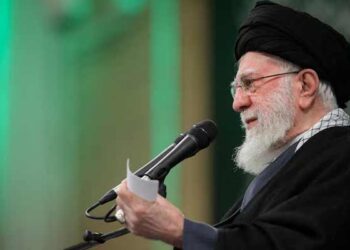
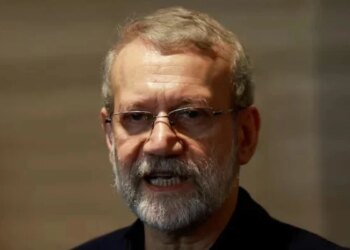
At 86, Ayatollah Khamenei has stepped back from daily governance, cutting back on public appearances and reportedly residing in secure locations following last year’s Israeli strikes that killed many senior military officials. Oversight has shifted to IRGC figures like senior adviser Ali Larijani, who control Iran’s security and significant parts of its economy.
Despite reduced visibility, Khamenei retains ultimate authority over military decisions, succession, and nuclear policy. Political change remains challenging until he exits the scene, Iran’s foreign ministry said in response to questions.
Some Western officials believe that a transition in Iran could break the nuclear deadlock and foster better relations with the West. However, they caution that there is no clear successor to Khamenei, and the IRGC might take over in a power vacuum—potentially reinforcing conservative rule, deepening nuclear tensions, and regional instability.
Any successor emerging under foreign pressure would likely be opposed domestically and could strengthen Iran’s hardliners. Regional officials generally favor containment over collapse, fearing that chaos could trigger civil war reminiscent of post-invasion Iraq in 2003, leading to refugee flows and disruptions in oil transit through the Strait of Hormuz.
Analyst Vatanka warned that Iran could fracture into a “proto-Syria,” with rival factions fighting for territory and resources.
Regional Responses and Risks
Neighboring Gulf states—long-time U.S. allies—fear being targeted first in Iranian retaliations, which could include missile or drone attacks launched by Tehran or its Houthi allies in Yemen.
Saudi Arabia, Qatar, Oman, and Egypt have advised Washington against striking Iran. Saudi Crown Prince Mohammed bin Salman told Iranian President Pirooz Pescakhian that Riyadh would not allow its territory or airspace to be used for military operations against Iran.
One Arab source said, “The U.S. might initiate the strike, but it will bear the consequences; we will not.”
Middle East analyst Mohannad Hajj-Ali of the Carnegie Middle East Centre noted that U.S. troop movements suggest plans are shifting from a single strike to a more sustained campaign, aimed at preventing Iran from rearming its missile programs or weaponizing its enriched uranium.
Vatanka sees the likely scenario as a slow erosion—entailing elite defections, economic paralysis, and contested leadership—that could eventually unravel the system.
 ChatGPT
 Perplexity
 Gemini AI
 Grok AI