Select Language:
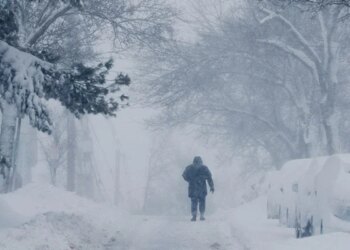
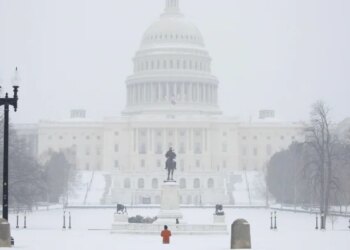
A severe snowstorm continued to cause travel disruptions across southern US states on Sunday, bringing dangerously low temperatures to areas unprepared for such winter conditions.
This latest severe weather event followed closely on the heels of a major storm last week that swept across much of the country, resulting in over 100 fatalities and widespread snow and ice accumulation that hampered communities’ recovery efforts.
On Saturday, heavy snowfall blanketed North Carolina and neighboring states, prompting officials to advise residents to avoid travel and warning that coastal structures were at risk from the storm’s impact.
All of North and South Carolina, along with parts of Georgia, eastern Tennessee, Kentucky, and southern Virginia, were under winter storm warnings. In North Carolina, there were 750 car crashes reported on Saturday alone, according to state highway officials.
North Carolina’s Faust recorded 14.5 inches of snow, while West Critz, Virginia, received about 12.5 inches. Meanwhile, Harrisburg, Tennessee, saw more than nine inches of accumulation. In Cape Carteret, North Carolina, strong winds pushed snow horizontally, prompting the National Weather Service to warn of treacherous, potentially life-threatening travel conditions, especially if stranded.
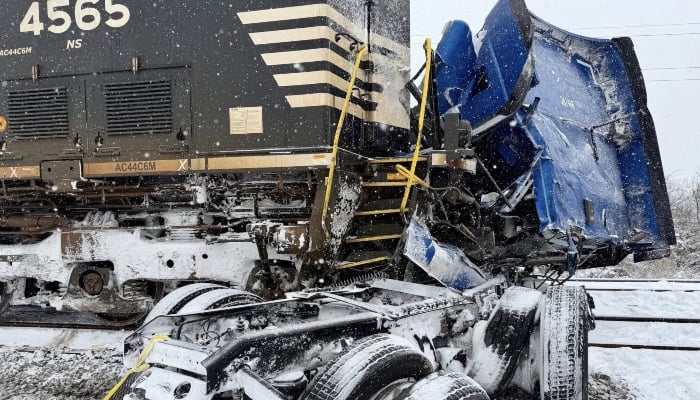
In dramatic footage from Gastonia, North Carolina, a train collided at high speed with a semi-truck that was stuck on the tracks, destroying the truck but causing no injuries.
The storm weekend led to over 1,800 flight cancellations at Charlotte Douglas International Airport in North Carolina, a significant hub for American Airlines, according to FlightAware data. The airport deployed a 300-member snow removal team to clear runways, taxiways, and nearby roads.
Similarly, over 600 flights were canceled Saturday at Atlanta’s Hartsfield-Jackson International Airport, the world’s busiest airport, with about 50 flights disrupted early Sunday.
The National Weather Service warned that a rapidly intensifying coastal cyclone would continue to produce heavy snow, strong winds, and even blizzard conditions in the Carolinas. An arctic air surge behind the storm is expected to drive below-freezing temperatures as far south as South Florida by Sunday morning.
On Saturday, Davis, West Virginia, recorded the coldest temperature in the contiguous US at -28°F (-33°C). Early Sunday, approximately 156,000 customers remained without power, primarily across the southern states, with Mississippi, Tennessee, and Louisiana experiencing the most outages.
In North Carolina, the National Park Service announced the closure of campgrounds and some beaches in the Outer Banks, a string of barrier islands vulnerable to storm damage. Oceanfront properties were under threat, and a section of highway through the dunes was shut down.
In Mississippi, Governor Tate Reeves stated that the U.S. Army Corps of Engineers helped set up generators at critical locations, and around 79 shelters and warming centers were opened statewide.
The frigid conditions also caused NASA to delay a key rocket fueling test scheduled at Cape Canaveral, Florida, jeopardizing at least a few days’ delay for a planned manned mission around the Moon set for later this month.
 ChatGPT
 Perplexity
 Gemini AI
 Grok AI