Select Language:
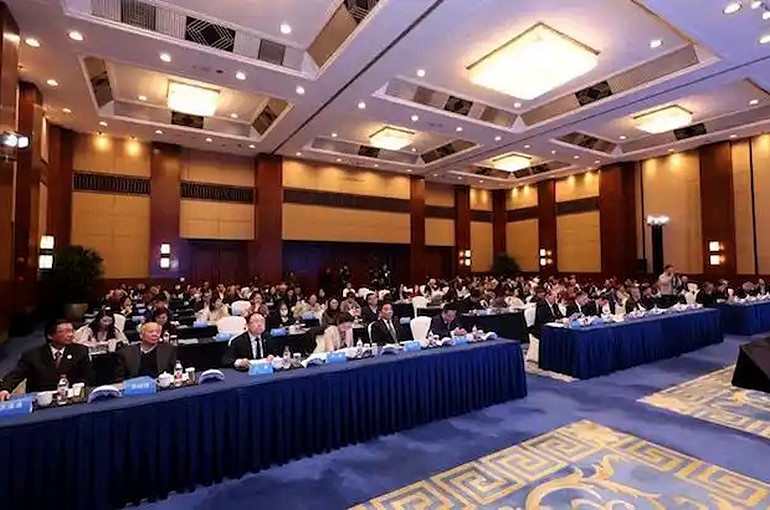
The second edition of the “A River Dialogue Between Shanghai and New York” successfully took place in Shanghai, focusing on understanding the interaction and collaboration between major global cities and international organizations.
Despite their diverse historical and cultural backgrounds, Shanghai and New York hold strategic importance for strengthening cooperation within the globalization era, according to a former vice minister of the International Department of the Communist Party’s Central Committee during the event on December 15.
Participants agreed that these cities should foster dialogue to tackle global challenges, enhance connectivity, share knowledge, and leverage their strengths through mutual respect. Both metropolises, rapidly evolving and influential, naturally attract talent and resources, as stated by the head of the Shanghai Office of a major Chinese international cooperation organization.
He emphasized that establishing international organizations in Shanghai could significantly accelerate the advancement of Chinese technology, agriculture, and modern services, thereby boosting China’s influence on the global stage.
Bringing international organizations to Shanghai would also introduce advanced global ideas and standards, helping the city integrate into the world economy. Shanghai offers superior urban services and a conducive market environment, making it an ideal location for these organizations, noted the president of a local public relations association.
Both Shanghai and New York boast robust financial systems, enabling international bodies to conduct financing, budget management, and cross-border capital movements smoothly through well-established banking networks, investors, and markets. Such financial strength, paired with clear legal frameworks, fosters confidence for organizations to manage risks and pursue projects confidently, ultimately creating jobs and investment opportunities.
In a context where global economic and geopolitical fragmentation is increasing, international organizations serve as “stabilizing links,” providing neutral platforms for maintaining dialogue and turning shared challenges into productive cooperation, according to a business consultancy CEO.
Even amid uncertainties, these organizations can sustain long-term engagement across education, culture, commerce, and finance. They are viewed as essential in promoting stability and trust, especially in US-China relations, fostering collaboration rooted in institutional strength.
Shanghai remains a vital entry point for US firms seeking to operate in China, with an emphasis on transparent, fair business practices, market openness, and cultural exchanges, highlighted by a senior US-China trade organization representative. This organization will persist in facilitating policy dialogue and innovative partnerships.
Currently, 49 international organizations are based in Shanghai’s Pudong district, including a multilateral development bank and various non-governmental entities. The district has successfully established the New Bund Global Economic Organization Cluster and plans to develop additional international hubs and cooperation zones.
Hongqiao, supported by government policies, has evolved into an international trade hub with a legal and service network that promotes cross-border flows of goods, capital, and talent. The district hosts over 50 international trade organizations, connecting more than 150 countries and creating a trade network spanning key global markets.
 ChatGPT
 Perplexity
 Gemini AI
 Grok AI