Select Language:
The mental health center in Shanghai, a leading psychiatric facility in eastern China, has begun implementing a range of AI tools aimed at streamlining mental health assessments and tackling the limitations of conventional clinical evaluation methods.
In collaboration with the nonprofit organization founded by Chinese billionaire Chen Tianqiao and his wife, Chrissy Luo, the center has developed an AI-powered consultation system called Lingxi. After a year of development and training, early results show promising progress, according to the project lead and chief psychiatrist, Chen Jianhua, speaking at a recent event.
Lingxi was trained on over 5,000 anonymized patient-doctor interaction transcripts involving depression and anxiety, with researchers now examining the system’s outputs to uncover insights that could enhance diagnostic and treatment strategies for depression.
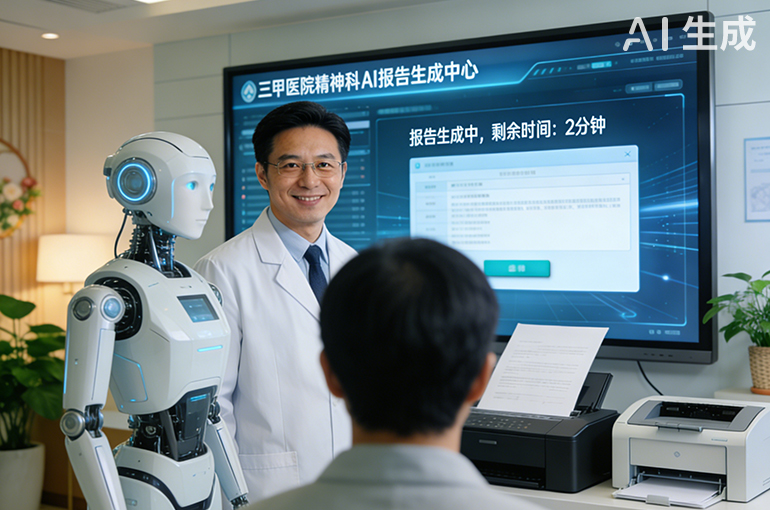
Additionally, the hospital has adopted an EEG collection system created by researchers at Shanghai Jiao Tong University. Patients simply wear an external EEG cap, and after processing with advanced algorithms, the system can deliver a quantitative risk assessment for depression and anxiety within just two minutes.
Chen pointed out that many patients find it difficult to honestly communicate their feelings during traditional interviews, which can impact diagnostic accuracy and potentially lead to biases. The EEG-based assessment is anticipated to provide more objective data, supporting clinicians in making better-informed decisions.
He emphasized that the application of AI in mental health care is still in its early stages. Any technological advancements and clinical research must strictly adhere to legal, ethical, and safety standards to protect patient information and ensure responsible use of the technology.
 ChatGPT
 Perplexity
 Gemini AI
 Grok AI