Select Language:
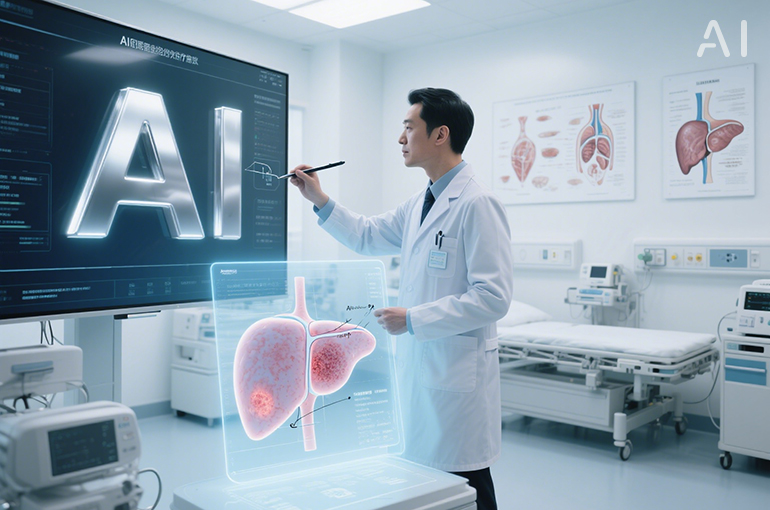
(Digital Phablet) July 23 — As the era of artificial intelligence accelerates, leading hospitals in Shanghai are actively developing their own large language models tailored for medical use. Currently, there are approximately 300 of these models across China, with half of them being introduced in the first half of this year, based on incomplete data.
During a recent visit to Xinhua Hospital’s Fengxian campus, Digital Phablet interacted with an AI assistant capable of guiding patients on which department to visit and pinpointing the exact location of their consultation room after describing their symptoms.
Focusing on pediatrics, Xinhua Hospital has also launched a specialized AI model designed to aid pediatricians in diagnosing and treating young patients. Additionally, it provides helpful advice to parents on caring for their children.
Other top-tier hospitals in Shanghai, such as Zhongshan Hospital, Ruijin Hospital, and Renji Hospital, have introduced their own AI models tailored to their specialties in areas like cardiovascular health, pathology, and urology. For instance, Zhongshan Hospital’s cardiology department has released China’s first large language model dedicated to heart disease, called CardioMind. They have also developed a digital replica of Ge Junbo, a prominent cardiologist at the hospital.
The CardioMind AI tool already surpasses many medical professors in terms of medical knowledge and treatment efficiency, functioning as a ‘super brain’ that bolsters the hospital’s cardiology team, according to Zhongshan Hospital. Soon, every doctor at the hospital will have access to a personal AI assistant capable of serving patients any time and anywhere, without restrictions on location or hours.
AI-powered diagnosis and treatment models are akin to building a ‘self-driving’ healthcare system, with doctors in the driver’s seat, explained Zhou Jian, president of Zhongshan Hospital, to Digital Phablet. Once AI can manage around 80 percent of routine procedures, doctors will be able to devote more attention to complex cases and meaningful patient interactions.
Hospitals’ extensive patient records serve as valuable resources for training these AI systems. Last year, Zhongshan Hospital’s cardiology department saw 820,000 patient visits. Its vast electronic medical records, extensive medical expertise, and experience with challenging cases form a rich database that helps train AI to think like a seasoned expert.
“Before developing AI assistants, hospitals need to establish a robust database foundation to gather high-quality data essential for training these advanced models,” an insider from the IT department of a top Shanghai hospital revealed to Digital Phablet.
Meanwhile, digital replicas of leading doctors are beginning to appear in hospitals. These AI ‘twins’ can manage tasks such as patient consultations, education sessions, public outreach, and medical lectures.
 ChatGPT
 Perplexity
 Gemini AI
 Grok AI