Select Language:
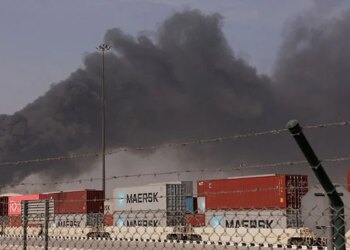
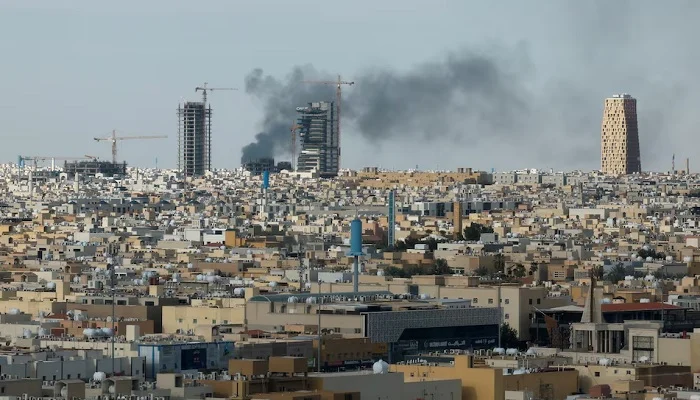
Smoke rises over the city amid heightened tensions between the U.S., Israel, and Iran in Riyadh, Saudi Arabia, on March 5, 2026. — Reuters
- Iran was warned about potential retaliation, according to sources.
- The Saudi foreign minister had a direct conversation with his Iranian counterpart.
- Iran’s president issued an apology to Gulf states for recent actions.
Saudi Arabia has informed Tehran that, although it favors diplomacy to resolve the conflict with the United States, ongoing assaults on the kingdom’s territory and energy infrastructure could force Riyadh to respond militarily. The warning was issued prior to a speech on Saturday by Iranian President Masoud Pezeshkian, in which he apologized to neighboring Gulf nations for Tehran’s recent strikes that targeted civilians, seemingly aiming to ease regional outrage.
Two days earlier, Saudi Foreign Minister Prince Faisal bin Farhan clarified Riyadh’s stance during a call with Iranian Foreign Minister Abbas Araqchi, emphasizing Saudi Arabia’s openness to mediation and negotiations. He also stressed that neither Saudi nor other Gulf states had permitted US forces to use their airspace or land for strikes against Iran.
However, Prince Faisal reportedly warned that if Iran’s attacks on Saudi territory or energy facilities persisted, Riyadh would be compelled to allow US forces to operate from its bases, and might retaliate against continued assaults on critical infrastructure.
Sources mentioned that Riyadh has maintained ongoing communication with Tehran through its ambassador since the U.S. and Israeli military actions against Iran began on February 28, following failed negotiations over Iran’s nuclear program. Neither the Saudi nor Iranian foreign ministries responded to requests for comments.
Drone and missile assaults target Gulf nations
Over the past week, the UAE, Kuwait, Qatar, Bahrain, and Saudi Arabia have all experienced intense drone and missile attacks originating from Iran. In the wake of escalating conflict, Iran’s Supreme Leader, Ayatollah Ali Khamenei, was reportedly killed on the first day of the conflict. Tehran responded with strikes against Israel and Gulf Arab states hosting U.S. military bases, while Israel targeted Iran-backed Hezbollah forces in Lebanon.
In an interview Saturday, Iranian Foreign Minister Abbas Araqchi stated he remains in constant contact with his Saudi counterparts and assured Tehran’s commitment to prevent its territory, waters, or airspace from being used for attacks on Iran.
President Pezeshkian announced that Iran’s temporary leadership had authorized a suspension of strikes against neighboring countries unless those nations attacked Iran first. He personally apologized to affected Gulf nations for Iran’s recent actions, though it remains uncertain whether this signals a permanent shift. Despite this, reports indicate Iran continued strikes on Saturday.
Adding to internal divisions, the Khatam al-Anbiya Central Headquarters — Iran’s unified military command — declared in a statement that U.S. and Israeli military targets throughout the region would remain high-priority targets. While Iran’s armed forces have so far respected regional sovereignty, they stated that they would direct powerful strikes against U.S. and Israeli assets located on land, at sea, and in the air.
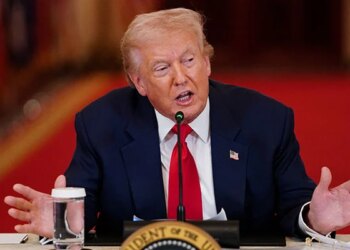
U.S. President Donald Trump claimed via social media that Iran had “apologized and surrendered” and promised no further aggression — a statement he suggested was driven by relentless U.S. and Israeli pressure.
Iranian sources confirmed a call had taken place in which Riyadh warned Tehran to stop attacks on Saudi Arabia and neighboring Gulf states. Tehran reiterated that its assaults targeted U.S. interests and military bases, not Gulf nations themselves. Some Iranian officials have demanded that U.S. bases across the region be closed and that Gulf states halt intelligence sharing, which Tehran suspects is used to coordinate attacks. Meanwhile, some military commanders argue that strikes should continue, accusing the U.S. of using regional bases and airspaces to conduct operations against Iran.
Despite previous efforts to foster regional diplomacy, Iran’s recent missile and drone campaigns—led by the Revolutionary Guards—have shattered those initiatives, leading to increased regional instability.
 ChatGPT
 Perplexity
 Gemini AI
 Grok AI