Select Language:
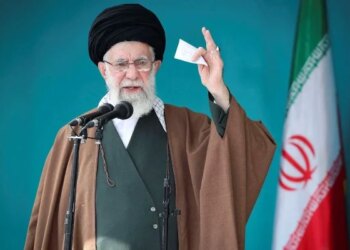
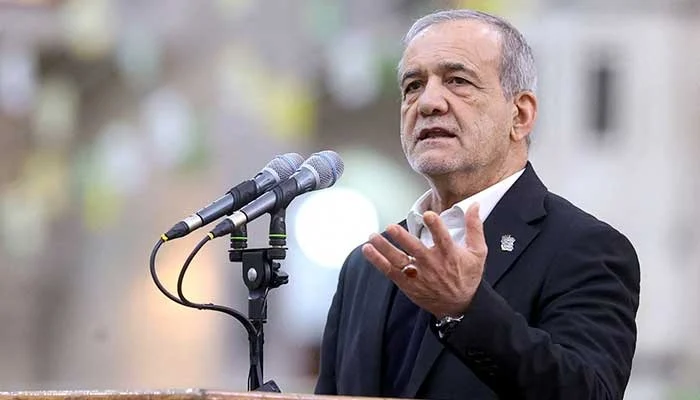
Iranian President Masoud Pezeshkian sent an open letter directly to the American people on Wednesday, questioning the reasoning behind the US-Israeli campaign against Tehran. He urged Americans to reflect on what’s really motivating Washington’s foreign policies.
In his comprehensive message, Pezeshkian challenged the long-held view of Iran as a security threat, traced decades of disputes in bilateral relations, and emphasized that Iran’s recent military actions are rooted in self-defense, not aggression.
His full letter states:
“In the name of God, the Compassionate, the Merciful”
“To the people of the United States of America, and to all those seeking truth amidst a flood of misinformation and fabricated stories, aiming for a better life:”
“Iran — by its very name, character, and identity — is among the oldest continuous civilizations in human history. Despite its geographical and historical advantages at different times, Iran has never historically chosen the path of aggression, expansion, colonialism, or domination. Even after experiencing occupation, invasion, and sustained pressure from global powers — and despite having military superiority over many neighbors — Iran has never initiated a war. Instead, it has steadfastly and courageously defended itself against attacks.”
“The Iranian people harbor no hostility toward other nations, including the peoples of America, Europe, or neighboring countries. Throughout their proud history marked by foreign interventions and pressures, Iranians have always distinguished clearly between governments and the people they serve. This distinction is deeply ingrained in Iranian culture and collective consciousness; it’s not just a temporary political stance.”
“Therefore, portraying Iran as a threat does not align with historical reality or current facts. Such perceptions are often driven by political and economic interests — creating enemies to justify exerting pressure, maintaining military dominance, bolstering the arms industry, and controlling strategic markets. In this environment, if a threat isn’t present, it’s invented.”
“U.S. forces, bases, and military strength are heavily concentrated around Iran, a country that, since the founding of the United States, has never started a war. Recent American military actions launched from these bases reveal how threatening this military presence truly is. In response, Iran has taken measured steps based on legitimate self-defense, not initiating war or aggression.”
“Relations between Iran and the United States were once friendly, and early interactions between their peoples were free of hostility. The turning point came with the 1953 coup — a covert American intervention aimed at blocking Iran’s move toward nationalizing its resources. This illegal act derailed Iran’s democratic process, restored dictatorship, and fostered deep distrust among Iranians towards U.S. policies. This distrust deepened with America’s support for the Shah, its backing of Saddam Hussein during the Iran-Iraq War, the imposition of the longest and most severe sanctions in modern history, and unprovoked military strikes against Iran during negotiations.”
“However, these pressures have failed to weaken Iran. The country has grown stronger in many ways: literacy rates have tripled from around 30% before the revolution to over 90%; higher education has expanded significantly; advances in science and technology have been substantial; healthcare services have improved; and infrastructure development has accelerated at a remarkable pace. These are tangible facts independent of any fabricated stories.”
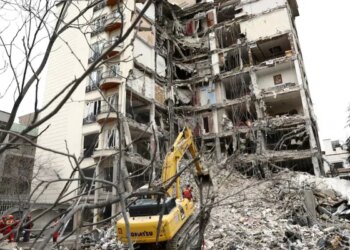
“At the same time, the suffering inflicted by sanctions, war, and aggression on the resilient Iranian population cannot be overlooked. Ongoing military strikes and bombings deeply impact people’s lives and perceptions. When war causes irreparable harm—destroying homes, cities, and futures—people inevitably blame those responsible.”
“This poses a question: what American interests are actually served by this war? Was there any real threat from Iran that justified such actions? Do the slaughter of innocent children, the destruction of medical facilities, or threats to bomb Iran back to the Stone Age do anything but diminish America’s global reputation?”
“Iran complied with negotiations and fulfilled all its commitments. The U.S. decision to withdraw from agreements, escalate tensions, and initiate acts of aggression amid talks only served aggressive foreign interests.”
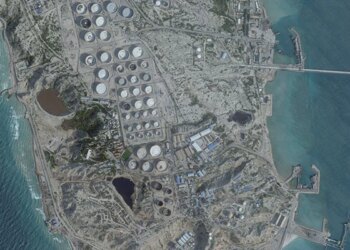
“Attacking Iran’s vital infrastructure, including energy and industrial sectors, directly harms Iranian civilians. Beyond being a war crime, such actions create instability, escalate human and economic costs, and foster long-term resentment. This is not strength—it’s strategic confusion and an inability to find a peaceful solution.”
“Is it also true that the United States is acting as Israel’s proxy, influenced by that regime? Is Israel’s effort to portray Iran as an existential threat a distraction from its own crimes against Palestinians? Does Israel intend to fight Iran using American soldiers and taxpayers’ money, in pursuit of its own illegitimate goals?”
“Is ‘America First’ genuinely a priority for today’s U.S. government?”
“I encourage you to look beyond the misinformation campaigns fueling this conflict. Talk with those who have visited Iran firsthand. Observe the many educated Iranian immigrants who now teach at leading universities or work at top tech companies in the West. Don’t these realities contradict the distorted image of Iran and its people?”
“The world stands at a crossroads today. Continuing the policy of confrontation is more costly and futile than ever. The choice between confrontation and engagement is critical and will shape future generations. Iran—resilient, proud, and enduring—has withstood many aggressors over millennia. Their names are mostly forgotten; Iran remains, dignified and strong.”
 ChatGPT
 Perplexity
 Gemini AI
 Grok AI