Select Language:
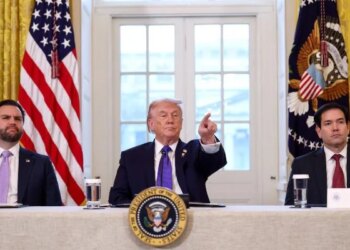
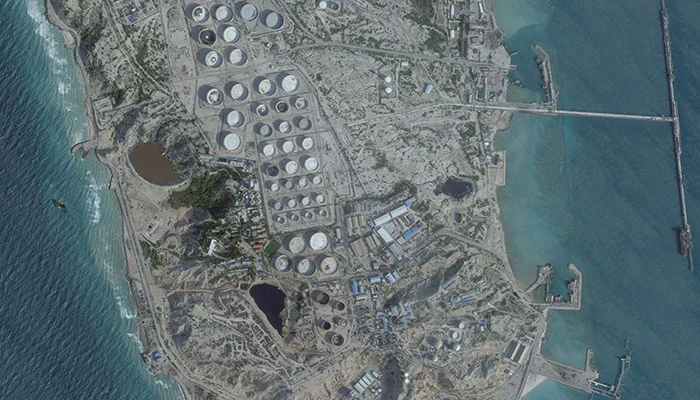
A small, barren island in the Gulf, roughly a third the size of Manhattan, Kharg Island is the hub of Iran’s oil industry—and now, the focus of ongoing U.S. pressure against Tehran. Recently, President Donald Trump publicly indicated that if Iran fails to reach an agreement to end the conflict, the U.S. could potentially erase the island’s significance altogether. Additionally, he mentioned that capturing the island would be “very easy,” especially given plans for possible ground operations.
Despite its modest size, Kharg is responsible for about 90% of Iran’s crude oil exports, according to JP Morgan. Situated in the northern Gulf, roughly 30 kilometers (20 miles) from Iran’s coast and over 500 kilometers from the Strait of Hormuz, the island hosts Iran’s largest oil terminal, pipelines, storage tanks, and military facilities. Some of these military installations have already been targeted by Israeli and U.S. strikes. On March 13, U.S. forces carried out a large-scale precision attack on Kharg, destroying naval mine storage sites, missile bunkers, and other military targets, while leaving the oil infrastructure largely intact. Reliable sources say Iran has bolstered its forces nearby, deploying additional troops, surface-to-air missiles, and mines.
The United States considers several options to seize Kharg, including airborne assaults, amphibious landings, or a combination of both. Currently, the Pentagon is moving paratroopers and Marines into the region, with military analysts suggesting that a small force—perhaps 800 to 1,000 Marines—could be enough to take the island. However, holding Kharg is a different challenge altogether. Experts warn that Iran’s missile and drone capabilities near Bushehr—an important military hub only 60 kilometers away—would make it difficult to maintain control over the island once captured.
President Trump’s true aim with these actions remains unclear. The main goals could range from forcing Iran to reopen shipping lanes in the Strait of Hormuz, to regime change, or to extracting concessions on Iran’s nuclear and missile programs. While capturing Kharg might give Washington leverage to press Iran into negotiations, it’s unlikely to reopen the Strait easily, given Iran’s control over other strategic islands in the area.
If Iran refuses to yield, the U.S. faces tough questions. Would a full-scale assault on Kharg lead to a broader conflict? Could retaliatory measures from Iran escalate, perhaps by shutting down the Strait of Hormuz altogether? Experts warn that trying to demolish Iran’s economic facilities on Kharg or other strategic points could backfire, causing even higher oil prices and prolonged disruptions to regional shipping routes—outcomes that would destabilize global markets and deepen tensions in the Gulf region.
 ChatGPT
 Perplexity
 Gemini AI
 Grok AI