Select Language:
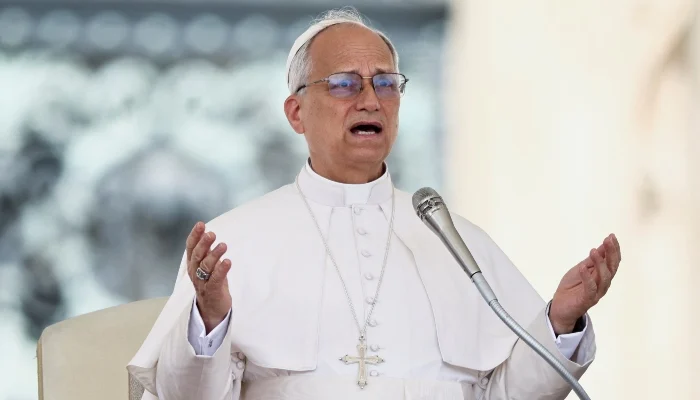
Pope Leo XIV is scheduled to canonize seven new saints this Sunday, including the first from Papua New Guinea, an archbishop who was killed during the Armenian genocide, and a Venezuelan known as a “doctor for the poor.”
Among those to be recognized at the ceremony in St. Peter’s Square on World Mission Day are three nuns who dedicated their lives to helping the impoverished and ill, along with Bartolo Longo, a former Satanic priest.
Born in 1841, the Italian attorney eventually returned to the Catholic faith and founded the Pontifical Shrine of the Blessed Virgin of the Rosary of Pompeii.
This will be the second canonization performed by the U.S. Pope since he assumed leadership of the Catholic Church on May 8. Last month, he declared Italians Carlo Acutis—a teenage dubbed “God’s Influencer” who spread faith online before passing away at age 15 in 2006—and Pier Giorgio Frassati—a model of charity who died at 24 in 1925—as saints.
In Catholic tradition, canonization is the final step toward sainthood after beatification. The process requires proof of at least two miracles, the individual being deceased for a minimum of five years, and leading an exemplary Christian life.
The individuals to be declared saints this Sunday include Peter To Rot, a lay catechist from Papua New Guinea who was killed during Japan’s occupation in World War II; Armenian bishop Ignazio Choukrallah Maloyan, murdered by Turkish forces in 1915; and Jose Gregorio Hernandez Cisneros from Venezuela, a layman who died in 1919 and was praised by the late Pope Francis as a “doctor close to the weakest.”
Also from Venezuela, Maria Carmen Elena Rendiles Martinez will be canonized. She was born without a left arm but overcame her disability to establish the Congregation of the Servants of Jesus and is recognized as the country’s first female saint.
From Italy, the recognized nuns include Vincenza Maria Poloni, who founded Verona’s Institute of the Sisters of Mercy in the 19th century to care primarily for hospitalized patients, and Maria Troncatti of the Daughters of Mary Help of Christians. In the 1920s, Troncatti traveled to Ecuador to dedicate her life to serving indigenous communities.
 ChatGPT
 Perplexity
 Gemini AI
 Grok AI